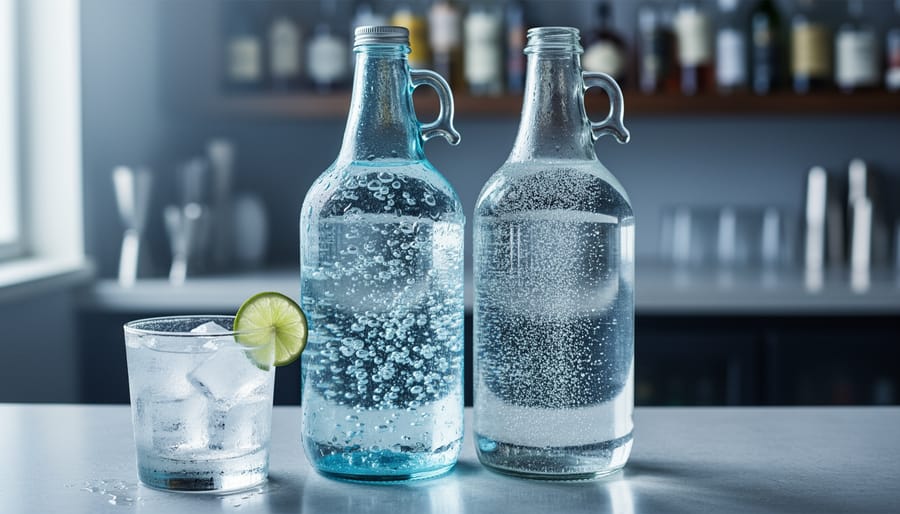
Here’s the truth most bartenders learn on day one: club soda and sparkling water are not the same thing, and the choice between them can make or break your cocktail. Club soda contains added minerals and salts that give it a slightly salty, bitter taste, while sparkling water is simply carbonated water with naturally occurring or no added minerals, offering a cleaner, more neutral flavor profile.
I discovered this the hard way when I swapped club soda for sparkling water in a whiskey highball during my first month behind the bar. The drink fell completely flat, lacking the subtle mineral backbone that makes a proper highball sing. That tiny difference taught me what countless home bartenders are now discovering as interest in carbonated mixers has surged: knowing which bubbles to use matters tremendously.
The confusion is understandable. Both appear identical in the glass, both fizz with carbon dioxide, and grocery store shelves often stock them side by side without clear explanation. But the distinctions go beyond simple semantics. Club soda’s added sodium bicarbonate, potassium sulfate, and other compounds create a distinct mouthfeel and taste that complement spirits differently than the purer taste of sparkling water. For gin and tonics, Tom Collins, and most classic mixed drinks, club soda’s mineral complexity balances alcohol and citrus beautifully. Sparkling water shines when you want carbonation without competing flavors, perfect for fruit-forward spritzes or when mixing premium spirits you don’t want to mask.
Whether you’re stocking a home bar for the first time or refining your mixing technique, understanding this distinction transforms you from someone who follows recipes into someone who knows why those recipes work.
Club Soda and Sparkling Water at a Glance
Here’s a simple truth I wish I’d known earlier: club soda and sparkling water aren’t interchangeable, and the difference matters most when you’re mixing drinks. Club soda is water highly charged with carbon dioxide plus added minerals like potassium sulfate, sodium chloride, disodium phosphate, and sodium bicarbonate, giving it a slightly salty, mineral-forward flavor. Sparkling water is normally naturally carbonated or infused with CO2 with minimal additions, offering a clean, neutral taste. If sodium is a concern, sparkling water is the better choice because the main difference comes down to club soda’s added mineral content.
| Factor | Club Soda | Sparkling Water |
|---|---|---|
| Carbonation | Highly charged with CO2 | Naturally carbonated or CO2-infused |
| Mineral Content | Added salts (potassium benzoate, sodium citrate, potassium sulfate) | Minimal or naturally occurring minerals |
| Sodium | Contains sodium | Typically none or trace amounts |
| Taste | Somewhat salty, mineral flavor | Clean, neutral |
| Best For | Classic cocktails, highballs | Delicate flavors, low-sodium needs |
The verdict for cocktail enthusiasts? Stock both. Club soda adds subtle complexity to traditional recipes, while sparkling water lets premium ingredients shine without competing for attention.
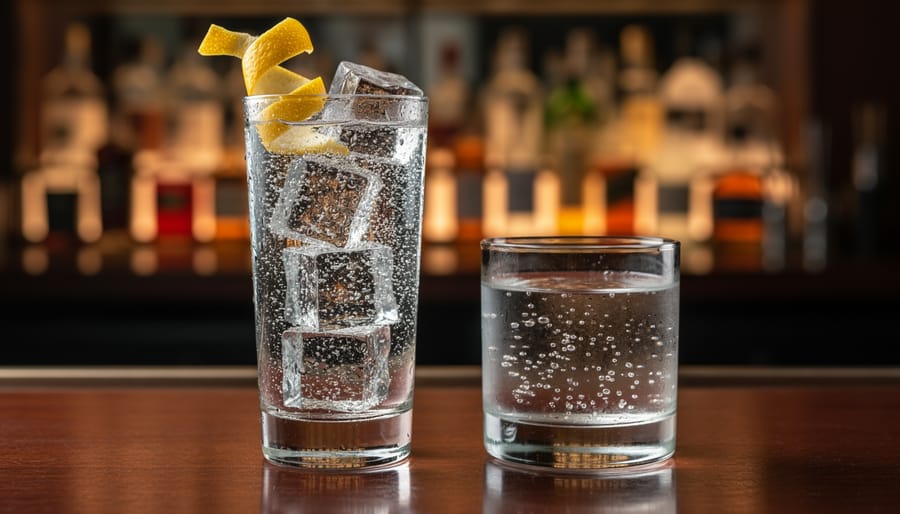
What Club Soda and Sparkling Water Actually Are
What Club Soda Is
Club soda is plain water that’s been highly charged with carbon dioxide under pressure, creating those signature bubbles. But what sets it apart from other fizzy waters is what happens next: manufacturers add a carefully selected blend of minerals and salts. These typically include potassium sulfate, sodium chloride (regular table salt), disodium phosphate, and sodium bicarbonate, along with compounds like potassium benzoate and sodium citrate.
I learned the hard way why these club soda added minerals matter when I made two identical gin and tonics side by side, swapping only the carbonated water. The club soda version had a noticeably different character, with a subtle savory edge I couldn’t quite place until I understood the mineral composition.
These added salts give club soda its characteristic slightly salty, mineral-forward taste. It’s not overpoweringly salty, but you can detect a faint briny quality that distinguishes it from completely neutral carbonated waters. The sodium chloride and other minerals create complexity that some cocktails benefit from, while others might be better served by a cleaner alternative. For bartenders, this mineral profile becomes a tool rather than a limitation.
What Sparkling Water Is
Sparkling water represents the purest form of carbonated water you’ll find behind most bars. Unlike its mineral-heavy cousin, sparkling water is normally naturally carbonated or infused with CO2, with minimal intervention beyond that effervescence.
The beauty of sparkling water lies in its simplicity. Most brands contain nothing more than water and carbon dioxide, no added salts, no minerals, no flavor enhancers. When you crack open a bottle, you’re getting a clean, neutral base that won’t compete with your carefully balanced cocktail ingredients.
Here’s where it gets interesting: sparkling mineral water can have carbonation that occurs naturally. Springs like Perrier and San Pellegrino source water that bubbles up from underground already charged with CO2. While carbonated water can be natural in these cases, many commercial sparkling waters achieve their fizz through artificial carbonation, still without the added minerals you’d find in club soda.
I’ve found this additive-free nature makes sparkling water ideal when you want carbonation without any flavor interference. The water itself tastes clean and neutral, letting delicate spirits and fresh ingredients shine through without that subtle salty undertone.
The Key Differences That Matter for Your Drinks
Ingredient Composition: What’s Actually in Each

The ingredient lists tell the real story. All carbonated waters except mineral water get their effervescence from being highly charged with carbon dioxide, that’s where those bubbles come from, whether you’re holding a bottle of club soda, seltzer, or plain sparkling water. The crucial difference lies in what happens after the carbonation.
Club soda is essentially carbonated water that manufacturers have purposefully enhanced with minerals and salts. Open a typical bottle and you’ll find sodium chloride, potassium sulfate, disodium phosphate, sodium bicarbonate, potassium citrate, and potassium benzoate. These additions aren’t random, they create that characteristic crisp, slightly salty flavor bartenders rely on for highballs and classic mixed drinks.
These minerals each play a specific role:
- Sodium chloride
- Common table salt that contributes the most noticeable salty edge to club soda’s flavor profile.
- Potassium sulfate
- A mineral salt that adds subtle complexity and helps balance the overall taste.
- Sodium bicarbonate
- Also known as baking soda, it provides a touch of alkalinity and affects mouthfeel.
- Disodium phosphate
- A buffering agent that helps maintain pH stability and contributes to the mineral character.
- Sodium citrate
- Adds a slight citrus-like quality while acting as a preservative and flavor enhancer.
- Potassium benzoate
- A preservative that extends shelf life without significantly altering the taste.
Sparkling water takes a minimalist approach. It’s normally naturally carbonated or infused with CO2, and that’s about it, just water and bubbles. Sparkling mineral water can have carbonation that occurs naturally, along with minerals picked up from underground sources, but these aren’t added during production. If sodium is a concern, sparkling water is the better choice because the main difference between seltzer and club soda is that added mineral content.
Mineral and Sodium Content: The Health Factor
The sodium story matters more than you might think, especially if you’re mixing multiple drinks or watching your salt intake. Club soda contains sodium as part of its mineral additions, and that little salt gives it a somewhat salty flavor you’ll notice when tasting it plain. I learned this the hard way when I recommended club soda to a friend tracking sodium for health reasons, we switched her bar cart to plain sparkling water immediately.
Sparkling mineral water takes a different approach. It can have naturally occurring minerals picked up from its source, but these typically don’t include the added salts you’ll find in club soda. The main difference between seltzer and club soda comes down to this added mineral content, which is why if sodium is a concern, seltzer or plain sparkling water is the better choice.
For most people making an occasional cocktail, the sodium in club soda won’t significantly impact your daily intake. But if you’re hosting a party and downing three or four fizzy drinks yourself, or if you’re managing blood pressure, those minerals add up. I keep both options behind my bar now, club soda for guests who want that classic mineral bite, and plain sparkling water for those who prefer a completely neutral mixer or need to limit sodium.
Taste Profile: How They Change Your Cocktails
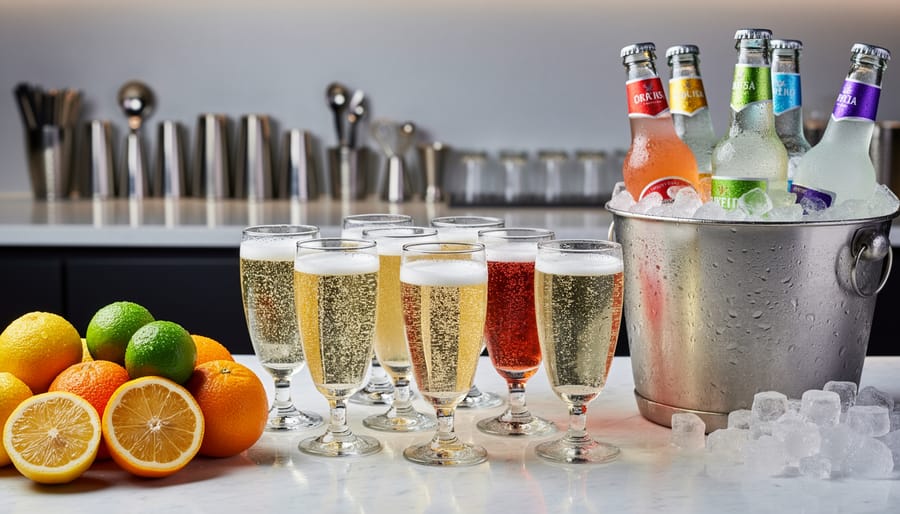
I’ll never forget standing behind the bar one night, mixing two identical Tom Collins drinks side by side, one with club soda, one with sparkling water. The difference shocked me. The club soda version had a rounder, slightly savory edge that made the gin and lemon pop differently. The sparkling water version? Cleaner, brighter, almost like the citrus was singing a higher note.
That’s the taste distinction in action. Club soda’s added minerals create a subtle saltiness that many people describe as a mineral-forward or slightly briny quality. It’s not overwhelming, but it’s there, a gentle background hum that adds complexity to whatever you’re mixing. Think of it as seasoning your drink without reaching for the salt shaker.
Sparkling water, by contrast, tastes like nothing, in the best possible way. It’s a neutral canvas that lets every other ingredient shine without interference. When I’m working with delicate botanicals in a gin-based spritz or showcasing a premium vodka in a highball, I reach for sparkling water because I don’t want anything competing with those flavors.
Most bartenders keep both on hand because they serve different purposes. Club soda works beautifully in drinks where you want body and a touch of savory depth, classic highballs, whiskey sodas, even a simple vodka soda benefits from that mineral complexity. Sparkling water excels when you need carbonation without personality, letting your spirits and mixers take center stage without any salty undertones muddying the profile.
Carbonation Character and Bubble Structure
The way bubbles feel in your mouth tells you a lot about what you’re drinking. Naturally carbonated sparkling mineral water tends to produce smaller, more delicate bubbles that create a silky mouthfeel, the kind that feels gentle and persistent on your tongue. When you make sparkling water at home or buy club soda, you’re getting artificially infused CO2, which typically creates larger, more aggressive bubbles that pop quickly and deliver a sharper carbonation bite.
This difference matters in cocktails. A Tom Collins made with naturally carbonated mineral water will have a softer, longer-lasting effervescence that integrates smoothly with gin and lemon. The same drink with club soda gets a more pronounced fizz that cuts through the spirit with authority, perfect if you want that bright, crackling sensation. Watch how bubbles cling to ice and rise through the glass: natural carbonation tends to be steadier and more refined, while club soda’s forced carbonation creates a livelier visual show.
Which One Should You Choose?
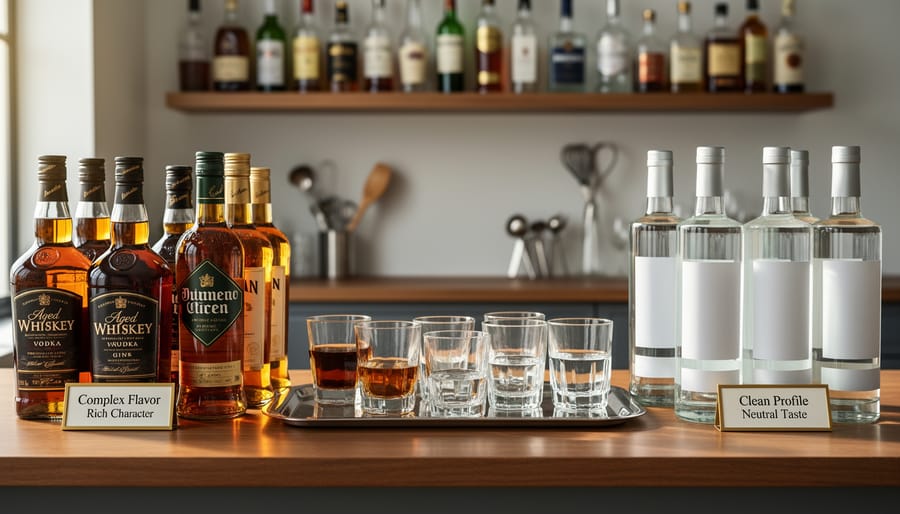
Best for Classic Cocktails and Traditional Recipes
Classic cocktails have relied on club soda’s mineral-forward character since the golden age of bartending, and there’s good reason why recipes haven’t changed. When you’re mixing a Tom Collins, a Whiskey Highball, or even a simple Captain and Ginger club soda’s added minerals, potassium sulfate, sodium chloride, disodium phosphate, and sodium bicarbonate, contribute a subtle backbone that balances sweet and acidic elements without announcing themselves. The slightly salty flavor rounds out citrus and complements aged spirits in a way that plain sparkling water can’t quite match.
I learned this firsthand when I tried substituting sparkling water in a classic gin fizz. The drink tasted fine, but it lacked the satisfying completeness I’d come to expect. That trace minerality isn’t just historical accident, it’s functional seasoning that vintage recipes were designed around. If you’re recreating cocktails from pre-Prohibition or mid-century bar guides, stick with club soda to taste what the original bartenders intended.
Best for Low-Sodium and Clean Flavor Profiles
If you’re watching your sodium intake or crafting drinks where you want the other ingredients to shine without interference, sparkling water is your go-to choice. Because club soda contains sodium and added minerals that give it a somewhat salty flavor, it can introduce unwelcome complexity when you’re working with delicate spirits or subtle botanicals.
I learned this the hard way when making a gin-based cocktail with elderflower liqueur, the club soda’s mineral notes muddied the floral character I was after. Switching to plain sparkling water let those nuanced flavors come through beautifully. The same principle applies when you’re making a Mojito mocktail where you want the mint and lime to stay front and center, or any modern cocktail built around premium ingredients.
If sodium is a dietary concern for you, sparkling water (or seltzer) is the better choice since the main difference between these options and club soda is that added mineral content. You get all the effervescence and refreshment without the sodium.
When Either Works (and When It Really Matters)
In spirit-forward cocktails like Old Fashioneds or Manhattans that you’re lengthening with just a splash of fizz, the choice barely matters, you’re adding so little that the mineral differences vanish. Same goes for punch bowls where everything melds together.
The distinction becomes critical in simple, two-ingredient drinks. A gin and tonic, Tom Collins, or vodka soda lives or dies by what you pour. I learned this the hard way when I used club soda in a delicate elderflower spritz and its salty edge completely overpowered the floral notes. Switch to sparkling water, and suddenly the drink sang.
Here’s my challenge: make the same highball twice this weekend, one with each option. Taste them side by side before the ice dilutes everything. You’ll quickly develop your own preferences for different cocktail styles, and that hands-on experience beats any article telling you what to taste.
Common Questions About Club Soda and Sparkling Water
Common Questions About Club Soda and Sparkling Water
Whether you’re mixing your first Virgin Mary or perfecting a classic highball, questions about these carbonated waters come up constantly at the bar. Here’s what bartenders and home mixologists ask most often.
Can you substitute one for the other in cocktails?
You can substitute them in most drinks, but the mineral content in club soda adds a slightly salty, complex flavor that sparkling water lacks. For delicate cocktails where you want clean carbonation without added taste, sparkling water works better, while classic recipes often benefit from club soda’s traditional mineral profile.
Is seltzer the same as sparkling water?
Seltzer is a type of sparkling water that’s artificially carbonated with no added minerals or salts, making it essentially plain carbonated water. If sodium is a concern, seltzer is the better choice because the main difference between seltzer and club soda is added mineral content.
Does club soda go flat faster than sparkling water?
They lose carbonation at similar rates once opened, as both get their effervescence from being highly charged with carbon dioxide. The key difference is that sparkling mineral water can have carbonation that occurs naturally, which some drinkers claim feels more persistent, though this varies by brand.
Which is better for hydration?
Both hydrate equally well, though club soda contains sodium and added salts like potassium benzoate and sodium citrate, which could matter if you’re watching your salt intake. Pure sparkling water provides hydration without any added minerals.
The mineral additions in club soda serve a specific purpose beyond flavor. Ingredients like potassium sulfate, sodium chloride, disodium phosphate, and sodium bicarbonate were originally added to mimic the taste of natural mineral springs, giving club soda that characteristic subtle saltiness. When you taste them side by side, that difference becomes obvious, especially in spirit-forward cocktails where the carbonation plays a supporting role rather than just providing fizz.
What Each Option Is
At their core, club soda and sparkling water are both fizzy water, but the production process and what’s added afterward set them apart in ways that genuinely affect how they taste and perform in cocktails.
Club soda starts as plain water that’s highly charged with carbon dioxide to create those bubbles you’re after. What makes it distinct is the addition of minerals and salts during production, specifically potassium sulfate, sodium chloride, disodium phosphate, and sodium bicarbonate. These additions give club soda a subtle minerality and a slightly salty edge that some bartenders love for adding complexity to mixed drinks.
Sparkling water takes a different approach. It’s normally naturally carbonated (think mineral springs) or infused with CO2, but the key difference is what it doesn’t have, those added minerals. When you buy sparkling water you’re getting a cleaner, more neutral carbonated base. Sparkling mineral water can have carbonation that occurs naturally, which often creates a different bubble structure and mouthfeel compared to artificially carbonated options.
The sodium content is worth noting if you’re watching your intake: club soda contains sodium from those added salts, while most sparkling waters keep sodium minimal or absent entirely.