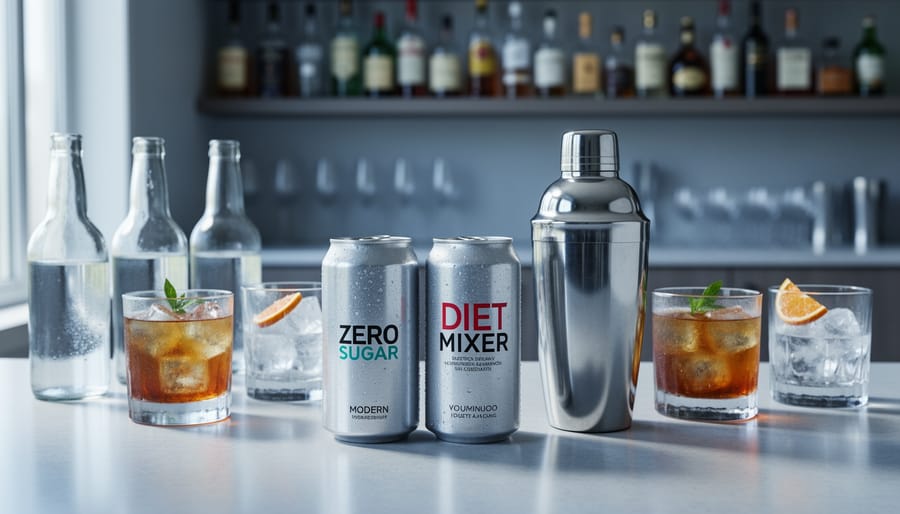
Looking to swap regular soda for zero-sugar options in your cocktails? Here’s what you need to know: zero-sugar drinks aren’t necessarily the healthy alternative the marketing suggests. While they eliminate added sugars and calories, they rely on artificial sweeteners like aspartame that research links to potential health risks when consumed regularly.
I’ll admit, I made the switch myself about three years ago. My home bar was stocked with diet mixers, zero-sugar tonics, and sugar-free sodas, all in the name of “healthier” cocktails. Then a nutritionist friend asked me a simple question over drinks: “Do you actually know what’s in those?” That conversation sent me down a research rabbit hole that completely changed how I stock my bar.
Zero-sugar sodas and their diet counterparts share nearly identical formulations, both packed with artificial sweeteners and chemical additives designed to mimic real sugar’s taste. The star player is usually aspartame, an ingredient 200 times sweeter than sugar that’s become one of the food industry’s most common sweeteners. The problem isn’t the immediate taste or the zero-calorie count that makes it attractive for mixing drinks. The concern lies in what happens after you drink it.
When your body breaks down aspartame, it produces methanol, aspartic acid, and phenylalanine. In large amounts, these metabolites can contribute to liver damage, alter brain chemistry, and increase free radicals in your system. Long-term exposure to artificial sweeteners may cause permanent damage that outweighs any benefits from cutting sugar calories.
This isn’t about fear-mongering or swearing off every zero-sugar mixer in your cabinet. It’s about understanding what you’re actually consuming and making informed choices for your body and your drinks.
What Zero-Sugar Drinks Actually Are
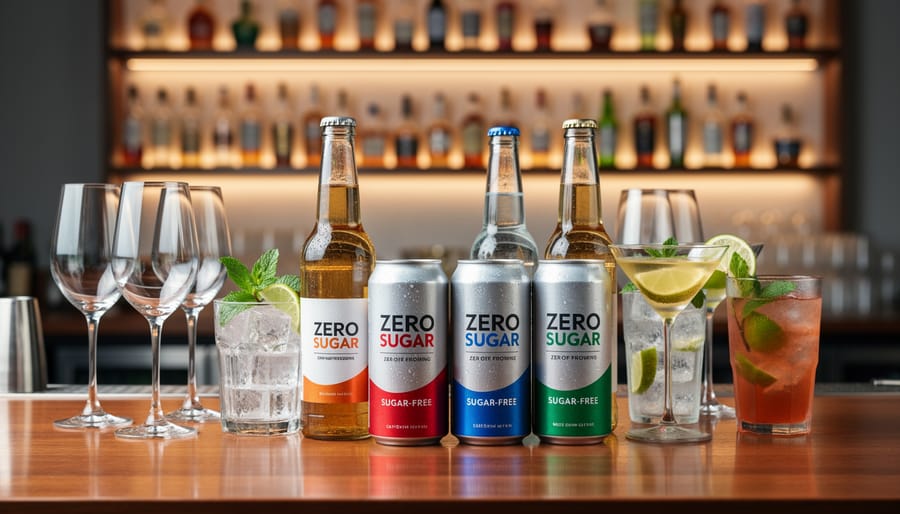
I still remember the first time I really paid attention to zero-sugar drinks. I was mixing Moscow Mules at a friend’s gathering when someone requested a “healthier” version. She handed me a can of zero-sugar ginger ale, and I noticed the label promised all the flavor with none of the sugar. It seemed like the perfect solution for guilt-free cocktails, but it got me wondering what exactly made these drinks so different.
Zero-sugar drinks are essentially sodas that contain no sugar calories but maintain a sweet taste through artificial sweeteners. When you pick up a can labeled “zero sugar,” you’re looking at a beverage that replaces traditional sugar with synthetic sweeteners designed to trigger your taste buds’ sweetness receptors without adding calories. The most common of these is aspartame, which is 200 times sweeter than real sugar, meaning manufacturers need only tiny amounts to achieve the desired sweetness level.
Here’s something that surprises many people: zero-sugar sodas and diet sodas are basically twins. Both contain artificial sweeteners and additives to mimic the taste of the real thing, and research shows they have relatively similar health impacts. The main difference is branding. “Zero sugar” emerged as a marketing refresh to appeal to consumers who associated “diet” with outdated weight-loss culture.
Beyond the sweeteners, these drinks include various additives to recreate the mouthfeel and flavor complexity of regular soda. You’ll find acids like citric or phosphoric acid for tanginess, natural and artificial flavors for taste depth, and preservatives to maintain shelf stability. It’s a carefully engineered formula designed to fool your palate into thinking you’re drinking the sugary original.
The Artificial Sweetener Question: What’s Really in Your Glass
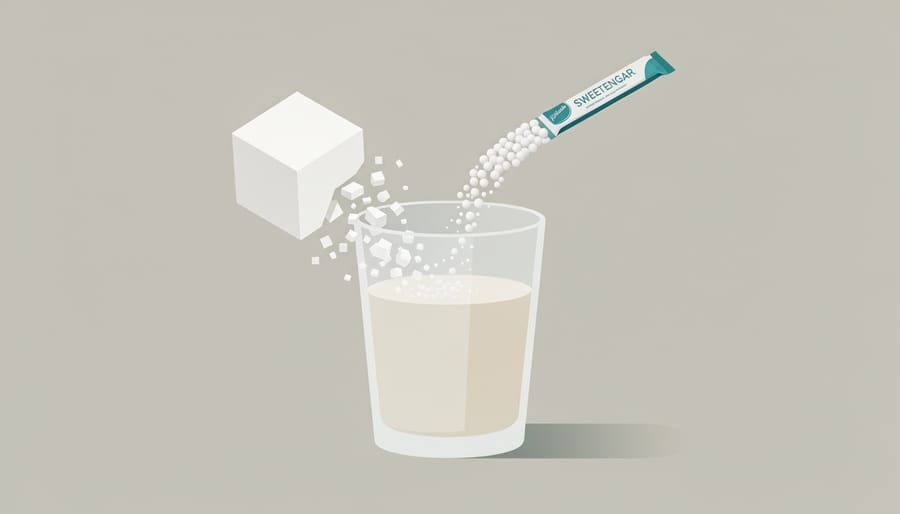
When you’re mixing a cocktail with tonic or adding a splash of diet cola to your rum, you’re probably not thinking about the chemistry happening in your glass. But if you reach for zero-sugar mixers regularly, it’s worth understanding what you’re actually consuming.
The star player in most zero-sugar drinks is aspartame, one of the most widely used artificial sweeteners in the food industry. Here’s what makes it both appealing and controversial: it’s 200 times sweeter than regular sugar, meaning manufacturers need only a tiny amount to deliver that familiar sweetness. That’s why your zero-sugar mixer tastes sweet despite having no sugar or calories.
So what happens when you drink it? Your body breaks down aspartame into three components: methanol, aspartic acid, and phenylalanine. Now, before you panic, these substances aren’t inherently toxic in small amounts. Your body encounters them from other sources too. But here’s where things get complicated for regular consumers.
In large amounts, these aspartame metabolites can potentially cause harm. Research suggests they may contribute to liver damage, neurochemical changes in the brain, and increased free radicals in your system. Think of it like this: one cocktail with a zero-sugar mixer at happy hour is different from drinking multiple diet sodas throughout the day, then adding more at the bar.
I learned this the hard way after months of using diet tonic in my nightly gin and tonics while also drinking zero-sugar sodas during the day. A bartender friend asked if I’d tallied my total aspartame intake. I hadn’t. When I actually tracked it, I was surprised by how quickly those “harmless” swaps added up.
The key is awareness. Long-term exposure to artificial sweeteners like aspartame could lead to permanent damage to your body, so understanding what counts toward your total intake matters more than any single drink choice.
Understanding the Health Impacts: What Research Shows
The science on zero-sugar drinks paints a nuanced picture, and it’s worth understanding what we’re actually dealing with when we reach for that diet mixer. Zero-sugar and diet sodas deliver remarkably similar health profiles because they rely on the same core ingredients, particularly artificial sweeteners that replace traditional sugar.
The primary concern centers on what happens when these sweeteners break down in your body. Aspartame, the workhorse of the zero-sugar category, doesn’t simply pass through unchanged. During digestion, it produces three distinct metabolites: methanol, aspartic acid, and phenylalanine. In moderate amounts, your body handles these compounds just fine. The trouble emerges with sustained, heavy consumption over time.
Research points to several potential impacts from long-term exposure to artificial sweeteners. Studies have identified concerns about liver function, with metabolites potentially stressing this crucial organ when consumed in large quantities. There’s also evidence suggesting neurochemical changes in the brain, though the mechanisms remain an active area of investigation. Additionally, the breakdown products may contribute to increased free radicals, those unstable molecules that can damage cells over time.
What’s clear is that these aren’t instantaneous effects. This isn’t about a single cocktail party where you mixed with zero-sugar tonic all evening. The research focuses on patterns of consumption, the cumulative exposure that builds when these drinks become a daily habit rather than an occasional choice.
The complexity lies in individual variation. Your body’s response depends on factors like your baseline health, liver function, overall diet, and the sheer volume you’re consuming. A zero-sugar ginger ale once or twice a week as a mixer presents a different scenario than downing four diet sodas every single day.
This context matters for making informed decisions. The research doesn’t scream “never touch this stuff,” but it does suggest that treating zero-sugar drinks as completely consequence-free might be oversimplifying a more complicated biological reality.
Who Should Consider Limiting Zero-Sugar Drinks
While zero-sugar drinks aren’t off-limits for everyone, certain groups should think twice before making them a regular part of their routine. If you fall into one of these categories, it’s worth evaluating how these beverages fit into your overall health picture.
Some people face specific risks that make limiting or avoiding zero-sugar drinks particularly important:
- People with phenylketonuria (PKU): This genetic condition prevents proper metabolism of phenylalanine, one of aspartame’s breakdown products, making aspartame-containing drinks potentially dangerous.
- Individuals with liver concerns: Since aspartame metabolites can stress liver function in large amounts, those with existing liver conditions should exercise caution.
- Anyone experiencing sensitivity symptoms: If you notice headaches, digestive issues, or mood changes after consuming artificial sweeteners, your body may be telling you something worth hearing.
- Heavy consumers of diet beverages: Drinking multiple cans daily increases exposure to aspartame metabolites, potentially leading to neurochemical changes and increased free radicals over time.
- Pregnant or nursing individuals: Though more research is needed, the potential for neurochemical impacts makes moderation sensible during these periods.
Here’s the thing: even if you don’t fit these specific categories, quantity matters. Sipping one zero-sugar cocktail mixer at a weekend gathering differs vastly from downing three diet sodas every day. The cumulative effect of long-term exposure to artificial sweeteners deserves consideration, especially when delicious alternatives exist.
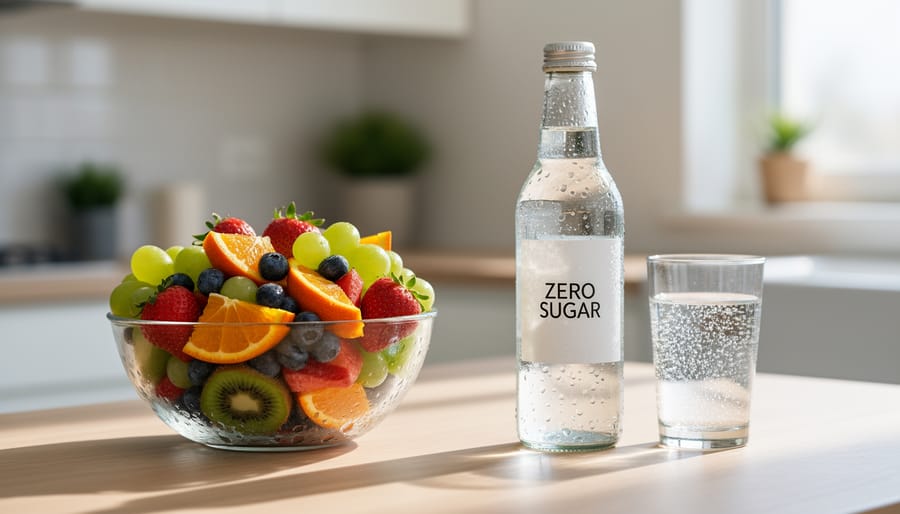
If you’re mixing drinks regularly and reaching for diet sodas as your go-to mixer, you might explore making sparkling water at home and adding fresh citrus or muddled herbs instead. It’s a simple shift that keeps your cocktails interesting while reducing artificial sweetener intake. The goal isn’t perfection; it’s making choices that align with your body’s needs and your lifestyle.
Making the Switch: How to Evaluate Your Own Consumption
Before you can decide whether zero-sugar drinks fit into your lifestyle, you need an honest picture of how much you’re actually consuming. Grab your phone and start a simple tally for one week. Note every zero-sugar soda, diet tonic in your gin and tonic, or sugar-free mixer you reach for. You might discover you’re having one at lunch and two while mixing evening cocktails without really thinking about it.
Once you’ve tracked the numbers, look for patterns. Do you crack open a Diet Coke every afternoon when energy dips? Pour diet ginger ale whenever you make a whiskey cocktail because it’s sitting in the fridge? Understanding your triggers helps you address the actual need rather than defaulting to artificial sweeteners out of habit.
Now comes the fun part: exploring what else could fill that glass. Sparkling water transforms from boring to brilliant when you know how to use it. Mexican sparkling water brings a crisp, clean effervescence to margaritas and palomas that diet sodas can’t match. For everyday drinking, try plain seltzer with a squeeze of fresh lime, or infuse it overnight with cucumber and mint.
In cocktails, fresh citrus changes everything. A vodka soda becomes genuinely refreshing with muddled grapefruit instead of diet grapefruit soda. Swap the diet cola in your rum and Coke for actual cola syrup (yes, the real stuff in small amounts) mixed with seltzer, you control the sweetness and skip the aspartame entirely.
Transition gradually rather than going cold turkey. If you’re drinking four zero-sugar sodas daily, replace one this week with sparkling water and fresh fruit. Next week, swap another. Your taste buds need time to recalibrate after years of aspartame’s intense 200-times-sweeter-than-sugar punch.
Keep alternatives visible and convenient. Stock your bar cart with quality sparkling water, fresh citrus, and herbs. When the good stuff is within arm’s reach and the zero-sugar option requires a trip to the store, you’ll naturally drift toward fresher choices. The goal isn’t perfection, it’s making intentional decisions about what goes into your body and your cocktails.
Comparing Your Options: Zero-Sugar vs. Alternatives
Let me level with you: not all mixers are created equal, and what you choose for your cocktails affects more than just taste.
| Beverage Type | Sweetener | Health Considerations | Best Cocktail Uses |
|---|---|---|---|
| Zero-Sugar Soda | Aspartame, sucralose | Potential long-term impacts on liver and brain chemistry | When you need consistent sweetness without calories |
| Regular Soda | Sugar, HFCS | Blood sugar spikes, excess calories | Classic cocktails where real sugar matters |
| Sparkling Water | None | Minimal concerns, hydrating | Highballs, spritzers, anything citrus-forward |
| Fresh Juice Mixers | Natural fruit sugars | Moderate natural sugar, vitamins included | Tropical drinks, margaritas, fresh sours |
The club soda vs sparkling debate matters here because both offer fizz without sweeteners. I’ve found sparkling water works brilliantly in gin and tonics when you add fresh lime and a touch of simple syrup yourself. You control exactly what goes in.
Fancy sparkling water has genuinely changed how I approach mixing. Premium brands with natural fruit essences deliver flavor complexity without the artificial sweetener baggage. They’re pricier, sure, but for special cocktails they’re worth it.
Fresh juice mixers represent the middle ground. Yes, they contain natural sugars, but you’re also getting vitamins and authentic fruit flavor. A proper margarita with fresh lime juice simply tastes better than one made with zero-sugar lime soda, and the nutritional trade-off feels more honest.
For everyday drinking between cocktails, sparkling water wins hands down. For special occasions when you want that classic cola flavor in a rum and coke? Make an informed choice based on your overall consumption patterns rather than assuming zero-sugar automatically means healthier.
How to Apply or Complete the Process
There isn’t an official application or compliance process for evaluating zero-sugar drinks, this is a personal health decision you make based on your own consumption patterns and wellbeing goals. However, there is a practical approach you can follow to assess and adjust your intake systematically.
Start by tracking your current consumption for one week. Note every zero-sugar drink you have, the time of day, and what prompted you to reach for it. This creates your baseline and reveals patterns you might not have noticed.
Next, identify which drinks you genuinely enjoy versus which ones are just habits. Perhaps you always grab a diet soda with lunch, but you’d be equally satisfied with sparkling water and lime, a combination that works beautifully in cocktails too.
Set a personal limit that feels sustainable. If you’re currently drinking four diet sodas daily, you might aim for two, replacing the others with alternatives like infused water or club soda with fresh citrus.
Finally, give yourself at least two weeks to adjust. Your palate needs time to recalibrate to less intense sweetness. You’ll likely find that fresh ingredients in your cocktails taste more vibrant once you’re not constantly exposing your taste buds to sweeteners that are 200 times more potent than sugar.
Your Rights and Responsibilities
When it comes to zero-sugar drinks, you have both consumer rights and personal responsibilities worth understanding.
You have the right to accurate labeling. Manufacturers must list all ingredients, including artificial sweeteners like aspartame, on packaging. You’re entitled to this information to make informed choices, especially if you have phenylketonuria (PKU), a condition requiring you to avoid phenylalanine, one of aspartame’s metabolites. Products containing aspartame must carry a PKU warning label by law.
You’re also protected by food safety regulations that set acceptable daily intake limits for artificial sweeteners. These standards exist to minimize potential risks from long-term exposure.
Your responsibility? Actually reading those labels. Check what’s in your mixers and sodas, particularly if you’re consuming them regularly or mixing multiple drinks daily. If you have health conditions affecting your liver or brain chemistry, consult your healthcare provider about whether zero-sugar options suit your situation.
There’s no official deadline for making changes to your beverage habits, but understand this: consistent consumption of large amounts of artificially sweetened drinks could potentially lead to the health impacts research has identified, liver damage, neurochemical changes, increased free radicals.
The consequence of ignoring these considerations isn’t immediate, but cumulative exposure matters. Your health is your responsibility, and staying informed protects it.
Where to Get Official Help
For health concerns about zero-sugar drinks and artificial sweeteners, your best starting point is your primary care physician or a registered dietitian. These professionals can evaluate your individual health status, review your consumption patterns, and provide personalized guidance based on your medical history. If you suspect you’re experiencing adverse reactions to artificial sweeteners, schedule an appointment to discuss your symptoms and dietary habits.
The Academy of Nutrition and Dietetics offers a “Find an Expert” tool on their website where you can locate registered dietitian nutritionists in your area who specialize in nutritional counseling. Many offer virtual consultations, making it convenient to get professional advice about beverage choices and healthier alternatives for your cocktail mixing.
If you have specific metabolic conditions like phenylketonuria (PKU) or diabetes, your specialist should be your first resource for questions about artificial sweeteners. They understand how these ingredients interact with your particular condition and can recommend safe consumption levels or alternatives.
For general nutrition information and ingredient safety data, the FDA’s website maintains current information about approved artificial sweeteners and their recommended limits. While they won’t provide personal advice, their resources can help you understand regulatory standards and safety assessments for common ingredients like aspartame.
Questions Cocktail Lovers Ask About Zero-Sugar Options
Is zero-sugar soda actually better than regular soda?
Not necessarily. Zero-sugar and diet sodas have relatively similar health impacts to each other, but both differ from regular soda in ways that aren’t clearly “better.” You’re trading sugar’s caloric and glycemic effects for artificial sweeteners that research suggests may negatively affect your health in different ways.
Are zero-sugar sodas healthier overall?
The research paints a complicated picture. While they eliminate sugar and calories, long-term exposure to artificial sweeteners like aspartame could lead to permanent damage to your body, including potential liver damage, neurochemical changes in the brain, and increased free radicals when consumed in large amounts. “Healthier” depends entirely on your individual health profile and consumption levels.
Which diet sodas don’t contain aspartame?
Some brands use alternative sweeteners like sucralose, stevia, or acesulfame potassium instead of aspartame. Since aspartame is one of the most common artificial sweeteners used in the food industry today, you’ll need to check individual product labels carefully, as formulations vary by brand and even by product line within the same brand.
Should I use artificial sweeteners for weight control in my cocktail recipes?
That’s a personal decision based on your health goals and tolerance. If you’re mixing drinks regularly, substituting zero-sugar mixers might reduce overall calorie intake, but it won’t eliminate the calories from alcohol itself. Consider whether the trade-off makes sense for your situation, and remember that fresh citrus, herbs, and sparkling water can add flavor and complexity without either sugar or artificial additives.
I’ve noticed at parties that people often gravitate toward zero-sugar mixers thinking they’re making the healthier choice by default, then knock back three cocktails without considering the bigger picture. The sweetener question matters, but so does volume. If you’re someone who nurses one carefully crafted drink over an evening, the type of sweetener probably matters less than if you’re routinely consuming multiple servings daily, whether in cocktails or standalone beverages. The aspartame in your occasional Tom Collins mixer breaks down into methanol, aspartic acid, and phenylalanine during digestion, but occasional exposure is different from chronic, high-volume consumption where those metabolites can accumulate and potentially cause harm.
Where to Find Reliable Information and Support
Finding trustworthy information about beverage choices and health impacts doesn’t require a degree in nutrition, but it does help to know where to look. Start with the FDA’s website, which maintains current information on artificial sweeteners, approved ingredients, and safety assessments. The Academy of Nutrition and Dietetics offers evidence-based resources written for everyday readers, and their site includes tools for finding registered dietitian nutritionists in your area if you want personalized guidance.
For ongoing nutrition research and beverage analysis, bookmark these reliable resources:
- USDA’s FoodData Central for verified nutritional content of drinks and mixers
- Mayo Clinic and Cleveland Clinic health libraries for accessible explanations of research findings
- PubMed for direct access to peer-reviewed studies (though abstracts alone often provide the key findings)
- Your primary care physician or a registered dietitian for personalized advice based on your health profile
Within the cocktail community, several mindful drinking movements have emerged that focus on fresh ingredients and natural alternatives. Platforms like Reddit’s r/Mocktails and various Instagram communities share creative recipes using sparkling water, fresh herbs, and real fruit instead of sweetened mixers. Many craft cocktail bars now post their ingredient lists online, which can spark ideas for healthier home versions.
When you encounter conflicting information, check the source’s credentials and funding. Nutrition research evolves, so what matters most is finding current, peer-reviewed studies rather than relying on a single headline. Your healthcare provider remains your best resource for questions specific to your individual health needs and concerns.
So, are zero-sugar drinks bad for you? The honest answer is: they’re not the villain some make them out to be, but they’re definitely not a free pass either. The research shows potential concerns with long-term artificial sweetener consumption, particularly aspartame’s metabolites affecting liver function and brain chemistry when consumed in large amounts. But context matters. An occasional zero-sugar mixer in your cocktail won’t derail your health, while downing multiple cans daily deserves a second look.
Your best move? Track what you’re actually drinking for a week and assess honestly. If you’re using zero-sugar sodas as everyday hydration or knocking back several diet mixers nightly, consider dialing back. But if it’s the occasional tonic in your gin and tonic, you’re probably fine.
Here’s what makes this genuinely exciting: you’ve got better options than you realize. Fresh citrus, muddled herbs, quality sparkling water with a splash of real fruit juice, these aren’t compromise choices. They’re upgrades. They bring complexity, brightness, and flavor that no artificial sweetener can match. Next time you’re mixing drinks, grab some fresh grapefruit or muddle some basil instead of reaching for that diet soda. Your taste buds will thank you, your body will appreciate it, and honestly? Your cocktails will just taste better. That’s a win worth raising a glass to.