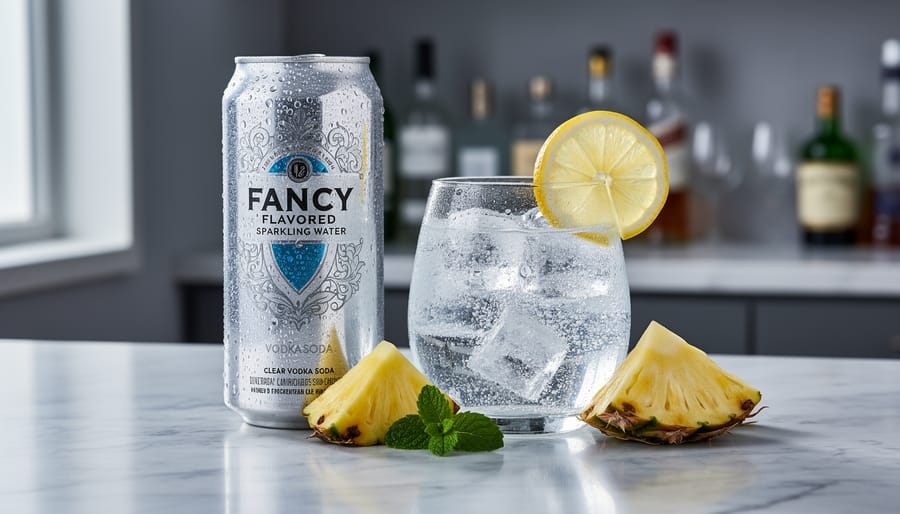
I’ll be honest: when I first heard about Market Brewing Co.’s Fancy Sparkling Water, I assumed it was just another overpriced seltzer trying to justify a premium label. Then I mixed a pineapple-flavored can into a vodka soda at my home bar, and I immediately understood the difference. These sugar-free, carb-free sparkling waters deliver the kind of bright, genuine fruit flavor that regular club soda can’t touch, and they’re potent enough to actually hold up against spirits without disappearing into the background.
What sets premium sparkling waters like Fancy apart from the grocery store basics comes down to one thing: flavor intensity. Most standard seltzers add just enough essence to give you a hint of lemon or lime. Fancy Sparkling Water and similar brands go several steps further, creating flavors like mango, peach, raspberry, and lemon that taste like you actually muddled fresh fruit into your drink. That makes them invaluable for home bartenders who want to build complex cocktails and mocktails without hauling out the citrus juicer or dealing with simple syrup.
The practical question becomes how to actually use them. I’ve spent the better part of this year testing these waters in everything from classic highballs to zero-proof creations, and the learning curve is shorter than you’d think. Because the flavor is already dialed in, you’re mostly playing with spirit pairings and adjusting ratios. A 473 ml tall can gives you enough for two generous drinks or three modest ones, and since there’s no sugar involved, you control the sweetness entirely through your other ingredients.
What Makes Fancy Sparkling Water Different from Regular Seltzer
Not all sparkling water is created equal, especially when you’re building a cocktail that deserves to shine. Regular grocery-store seltzer gets the job done for basic hydration, but it falls short when precision and flavor matter. The difference between standard bubbles and premium sparkling water designed for mixing comes down to three key factors: carbonation intensity, mineral balance, and flavor authenticity.
Premium sparkling waters engineered for cocktails maintain higher, more consistent carbonation levels that survive the dilution and stirring inherent in drink-making. They won’t go flat halfway through your second round. The mineral content also plays a subtle but important role, where tap-carbonated seltzers can taste slightly metallic or harsh, well-formulated sparkling waters offer a cleaner backdrop that lets other ingredients sing. Understanding the club soda vs sparkling water distinction helps here, since club soda’s added minerals create a different mouthfeel than pure sparkling water.
Market Brewing Co.’s Fancy Sparkling Water represents this next-generation approach. It’s sugar-free and carb-free, which gives you complete control over your cocktail’s sweetness rather than fighting against pre-sweetened mixers. The 473ml tall can format is deliberately chosen for bartending, it’s the perfect size to split between two drinks or build one generous highball with leftovers for a top-up.
What really sets Fancy Sparkling Water apart is the natural flavor intensity. These aren’t timid hints of fruit; they deliver genuine pineapple, mango, peach, raspberry, and lemon character that holds its own against spirits, citrus, and bitters. I’ve used them alongside fresh ingredients and been genuinely impressed by how they complement rather than compete, a rarity in the flavored sparkling water category.
The Five Flavor Profiles That Work Magic in Cocktails
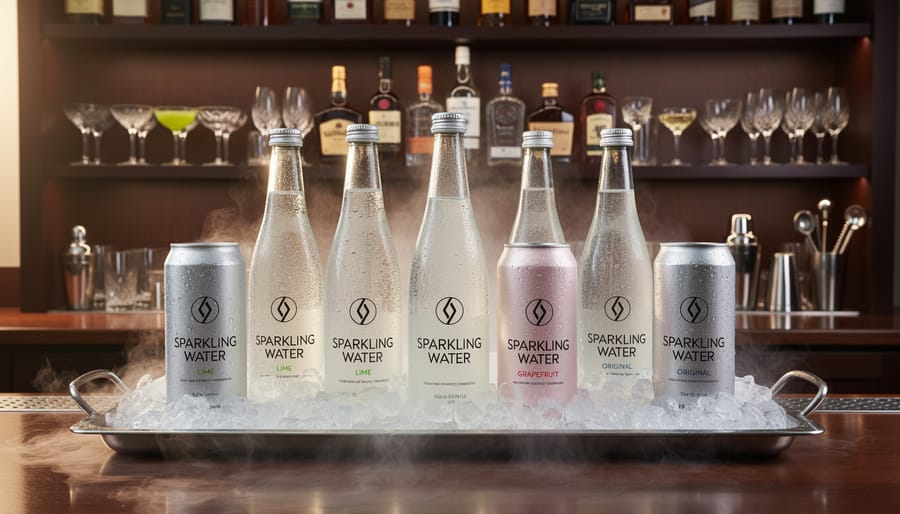
Tropical Flavors: Pineapple and Mango
The pineapple and mango varieties deliver that vacation-in-a-glass vibe without the cloying sweetness that often sinks tropical drinks. I’ve watched guests do a double-take when they realize there’s no sugar bomb hiding in their mai tai, just clean, bright fruit flavor that lets the rum actually shine.
Pineapple works beautifully in any drink where you’d normally muddle fresh pineapple or reach for juice. Think elevated piña coladas, tiki highballs, or a simple rum and sparkling pineapple that tastes far more sophisticated than it has any right to. The carbonation cuts through coconut cream and heavier spirits in a way flat juice never could, adding textural contrast that makes each sip more interesting.
Mango brings a softer, almost creamy fruit character that pairs exceptionally well with aged rums and tequila. I’ve built entire summer mocktail menus around the mango variety, it’s got enough body to stand up as the star ingredient in a virgin margarita or complement muddled mint in a tropical riff on a mojito. The natural flavor intensity means you’re not fighting to taste the fruit, and guests who avoid sugar appreciate that the finish stays crisp rather than sticky.
Stone Fruit and Berry: Peach and Raspberry
Peach sparkling water has become my secret weapon for bourbon cocktails. The stone fruit’s natural sweetness plays beautifully with whiskey’s caramel and vanilla notes without adding sugar to the mix. I’ve found it works particularly well in summer and early fall drinks, when fresh peaches would be at their peak. Try topping a bourbon old fashioned variation with peach sparkling water for a lighter, more refreshing take on the classic.
Raspberry brings something different entirely. Its tartness and bright berry character make it ideal for vodka sodas that actually have personality, and it’s phenomenal with gin’s botanical profile. Where raspberry really shines, though, is as a champagne topper for easy spritz-style drinks. One guest at a recent gathering described a raspberry-topped prosecco as “what a mimosa wishes it could be.” The flavor has year-round versatility, but I reach for it most often during spring brunches and holiday gatherings when something festive but not overly sweet hits the right note.
The Classic: Lemon
Lemon sparkling water is the workhorse of the Fancy Sparkling Water lineup, and if you’re stocking only one flavor, this is it. I’ve reached for lemon more than any other variety because it pairs beautifully with virtually every spirit in my home bar, vodka, gin, tequila, bourbon, even rum. The bright citrus note lifts drinks without dominating the base spirit, adding that essential spark of acidity and freshness that turns a simple pour into something balanced and complete. Unlike juicing fresh lemons (which I still love, don’t get me wrong), the lemon sparkling water gives you consistent citrus brightness plus carbonation in one step, saving precious minutes when you’re making drinks for a group. It’s especially brilliant in classics like Tom Collins variations or vodka sodas where you want clean, crisp lemon character without any sweetness or pulp.
Three Signature Cocktails That Showcase Premium Sparkling Water
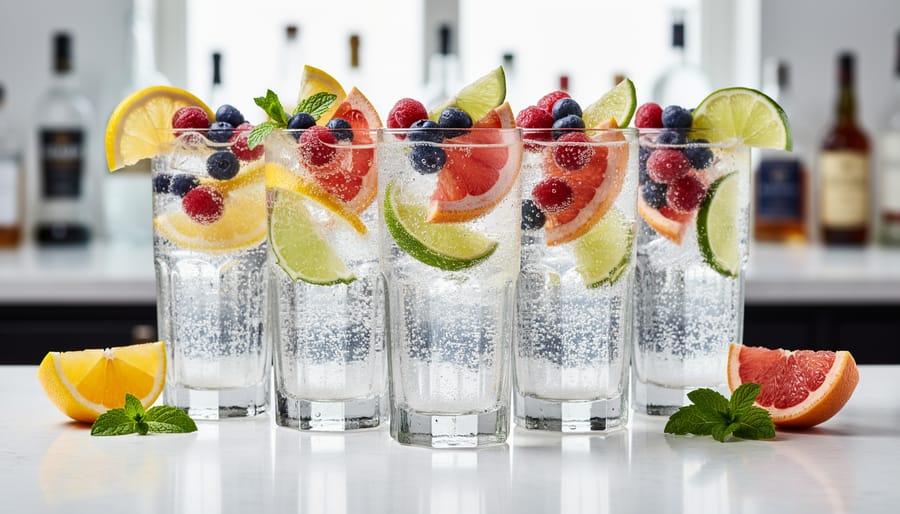
I still remember the night I served my first Fancy Sparkling Water-based cocktail at a dinner party. A guest who typically avoided sugary mixers took one sip of a lemon-topped highball and asked for the recipe immediately. That moment crystallized what premium sparkling water brings to bartending: sophisticated flavor without compromise. These three recipes showcase exactly that potential.
- The Golden Hour Highball (Alcoholic)
Ingredients: 2 oz aged rum, 0.5 oz fresh lime juice, 0.25 oz simple syrup, 4 oz Fancy Sparkling Water (mango), lime wheel for garnish
Instructions: Fill a Collins glass with ice. Add rum, lime juice, and simple syrup, then stir briefly. Top with mango sparkling water and stir gently once. Garnish with a lime wheel. The mango flavor adds tropical depth without the heaviness of juice, creating a cleaner alternative to a Captain and ginger while maintaining that easy-drinking appeal. - Aperitivo Sunset Spritz (Low-ABV)
Ingredients: 1.5 oz Aperol, 1 oz dry vermouth, 3 oz Fancy Sparkling Water (raspberry), orange twist
Instructions: Build in a wine glass over ice. Pour Aperol and vermouth, add raspberry sparkling water, and stir twice. Express orange twist over the drink and drop it in. This low-alcohol option became my go-to for afternoon gatherings after a friend described it as “dangerously refreshing.” The raspberry adds berry notes that complement Aperol’s bitterness beautifully, creating complexity you’d never achieve with plain seltzer. - Peach Garden Mocktail (Non-Alcoholic)
Ingredients: 1 oz fresh lemon juice, 0.75 oz honey syrup (1:1 honey to water), 3 dashes aromatic bitters (optional), 4 oz Fancy Sparkling Water (peach), fresh basil sprig
Instructions: Shake lemon juice and honey syrup with ice until well-chilled. Strain into an ice-filled highball glass. Add bitters if using, top with peach sparkling water, and stir gently. Garnish with a lightly slapped basil sprig. The natural peach flavor transforms this from “nice mocktail” to “why isn’t this on the cocktail menu?” territory, offering the kind of sophistication you’d find in a Key Lime Martini but without any alcohol.
What strikes me most about these recipes is their versatility. The Golden Hour works equally well with bourbon instead of rum. The Aperitivo Sunset adapts beautifully to Campari for a more assertive profile. The Peach Garden becomes a proper cocktail with the addition of vodka or gin.
The real revelation comes from the zero-sugar formula. Because Fancy Sparkling Water adds flavor without sweetness, you control the balance completely. In the mocktail especially, this matters tremendously. Traditional peach sodas would make it cloying, but the sparkling water lets the honey syrup provide just the right amount of sweetness while the peach essence adds dimension. One regular guest now requests the Peach Garden specifically because she can actually taste the lemon and honey, not just sugar and fizz.
Why the Zero-Sugar Formula Matters for Serious Bartending
When you’re building a cocktail from scratch, sugar isn’t just a sweet addition, it’s a structural element that affects viscosity, mouthfeel, and how alcohol hits the palate. That’s exactly why starting with a zero-sugar base like Fancy Sparkling Water gives you complete creative control. Instead of fighting against pre-sweetened mixers that limit your options, you’re working with a clean canvas where you decide exactly how much sweetness enters the glass.
I learned this the hard way years ago when a batch of margaritas came out cloying because I hadn’t accounted for the sugar already lurking in my “lightly sweetened” citrus mixer. With a sugar-free sparkling water, you know precisely what you’re adding when you reach for simple syrup, agave, or honey, no hidden sweetness throwing off your balance.
The clarity extends beyond sugar content. Natural flavoring in premium sparkling waters delivers fruit character without the murky aftertaste that can come with certain artificial sweeteners. There’s a meaningful distinction here: Fancy Sparkling Water achieves its flavor profiles through natural essences, not chemical sweeteners trying to mimic sugar. Research on caloric vs non-caloric beverages shows our palates can detect these differences, even in complex mixed drinks.
For the growing number of guests tracking macros or avoiding added sugars, offering cocktails built on zero-carb mixers isn’t just thoughtful, it’s expected. You’re not compromising flavor or sophistication; you’re demonstrating that elevated drinking experiences don’t require a sugar crash afterward. That’s a win for both the home bartender controlling every ingredient and the mindful drinker who wants the ceremony without the compromise.
Building Your Home Bar with Premium Sparkling Water
I keep a dozen cans of Fancy Sparkling Water in my bar fridge at all times, three each of lemon and raspberry, two each of the tropical flavors, and one peach for bourbon enthusiasts. This rotation covers about 90% of the drinks I make at home, from a classic Virgin Mary non-alcoholic topped with lemon to impromptu gin and tonics with a raspberry twist.
Storage matters more than you’d think. Premium sparkling water loses its magic when carbonation weakens, so follow these guidelines:
- Store cans upright in a cool, dark spot between 35-40°F for maximum fizz retention
- Never shake the cans, carbonation is the whole point
- Serve chilled but not ice-cold; around 40-45°F lets the natural flavors shine
- Once opened, use within 2-3 hours or the carbonation dissipates
Your flavor priorities should match your drinking style. If you lean toward citrus-forward cocktails and mocktails, lemon is non-negotiable, it’s the workhorse that pairs with everything. Spirit drinkers who favor whiskey and rum should prioritize peach and the tropical duo. For those building a mocktail program or hosting guests with varied preferences, raspberry and mango offer the most crowd-pleasing versatility.
Here’s my question for you: which Fancy Sparkling Water flavor would you reach for first, the reliable brightness of lemon, the tropical punch of pineapple, or the sophisticated berry notes of raspberry?
The cocktail world has always thrived on innovation, and premium sparkling waters like Fancy Sparkling Water represent that next wave, tools that let you build better drinks with less effort and more control. We’re past the days when a good mixer meant just grabbing whatever was on the supermarket shelf. Now, bartenders and home enthusiasts alike can reach for sugar-free, carb-free options that deliver real flavor intensity without compromising the drink’s balance. Whether you’re shaking up a low-ABV spritz for brunch or crafting a mocktail that rivals any cocktail in complexity, having those five distinct flavors, pineapple, mango, peach, raspberry, and lemon, at your fingertips changes what’s possible behind the bar.
I’ve found that the best drinks often come from experimenting with new ingredients and trusting your instincts. So grab a few cans, try pairing them with spirits you already love, and see where your creativity takes you. What’s the first flavor combination you’d mix up? Drop your ideas in the comments, I’d love to hear what you create.