Yes, sparkling water is acidic, but only mildly. When carbon dioxide dissolves in water, the two react to form carbonic acid, which is a weak acid. That’s the gentle bite you feel on your tongue, and it’s the same fizz that makes a gin and soda taste crisp instead of flat.
So should you worry? Probably not. Health Canada’s drinking water guidance on pH covers diet, general health effects and dental caries in separate sections, which tells you this question gets taken seriously, and it’s worth knowing what the evidence actually covers before you reach for alarm. Plain sparkling water sits in a very different category from sugary sodas, and the details of what’s in your glass matter far more than the bubbles alone.
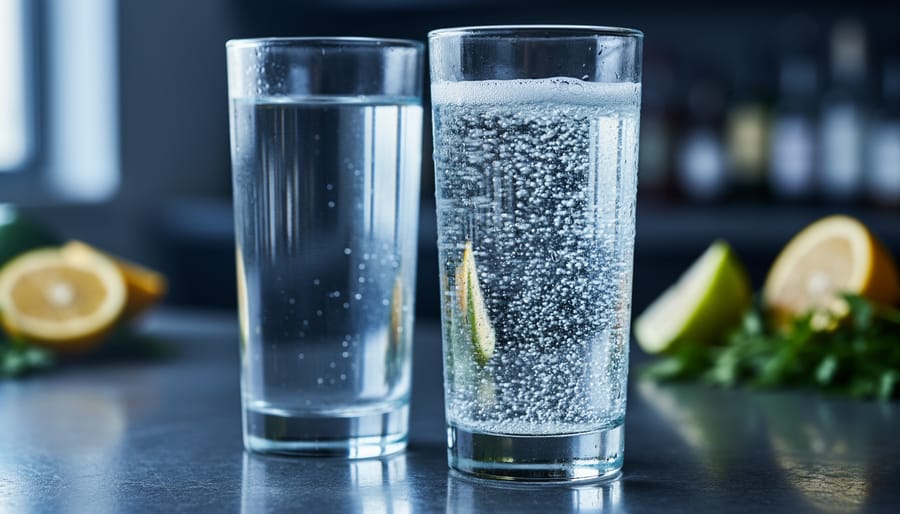
Here’s a quick test I like to run at home. Pour two glasses, one still and one sparkling, and take a slow sip of each. Notice that sharpness on the sparkling one? That’s carbonic acid at work, and it’s also what lifts citrus, bitters and herbs in a drink.
This article covers why sparkling water is acidic, how seltzer, club soda and mineral water differ, what the dental and body-acidity concerns really look like, and how to use all of it with confidence behind the bar.
What ‘Acidic’ Actually Means (and Where Sparkling Water Lands)
A Quick pH Refresher for Bartenders
Think of pH as a bar-shelf ruler for acidity: the lower a liquid sits, the sharper it tastes. Lemon juice lives at the zippy end, tonic sits a little further back, and still water floats near the middle. Sparkling water lands just a notch toward acidic from still water, nowhere near your citrus bin. Health Canada’s pH guidance includes a definition of pH if you want the formal version. Here’s the quick glossary:
- pH
- A scale that tells you how acidic or basic a liquid is.
- Acid
- A substance that brings sourness and lowers a liquid’s pH.
- Weak acid
- An acid that’s mild and gentle rather than harsh.
- Carbonic acid
- The weak acid formed when carbon dioxide and water react.
- Carbonation
- Carbon dioxide dissolved in a drink, which gives it bubbles and bite.
So when someone asks whether fizzy water is acidic, the short answer is yes, but mildly.
How Bubbles Become a Mild Acid
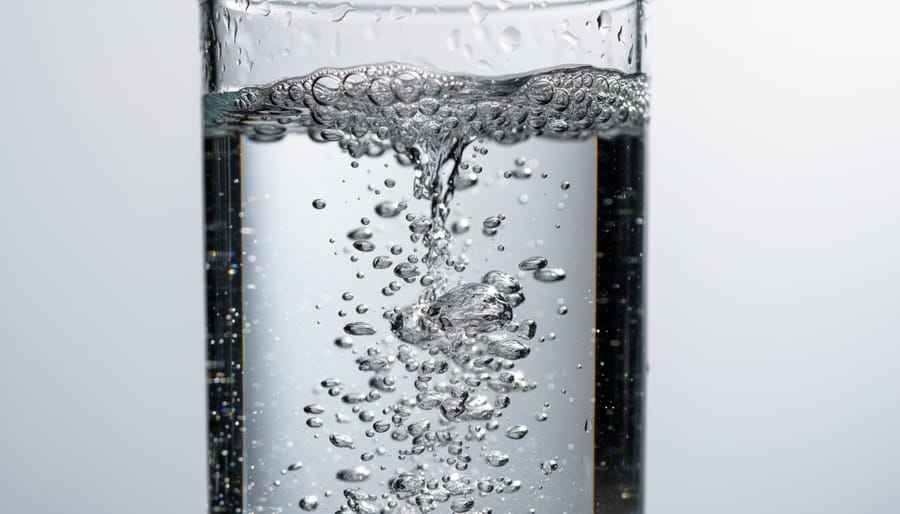
Here’s the neat part: the acid in your glass is made by the bubbles themselves. When carbon dioxide is pushed into water under pressure, some of it dissolves and reacts with the water to form carbonic acid. It’s the same basic chemistry behind CO2 forms carbonic acid just on a much smaller, tastier scale.
Carbonic acid is a weak acid, and that word matters. It never fully commits to being acidic. It forms easily, but it also falls apart easily, drifting back into plain water and CO2 gas. That’s why it gives you a gentle tingle on the tongue rather than anything sharp or sour.
Think about shaking a can of soda. The pressure inside keeps the gas dissolved, and the moment you crack the tab, the pressure drops and the CO2 starts racing out as fizz. Pour a glass and leave it on the counter, and you’re watching that same escape in slow motion. As the bubbles leave, so does the carbonic acid that came with them.
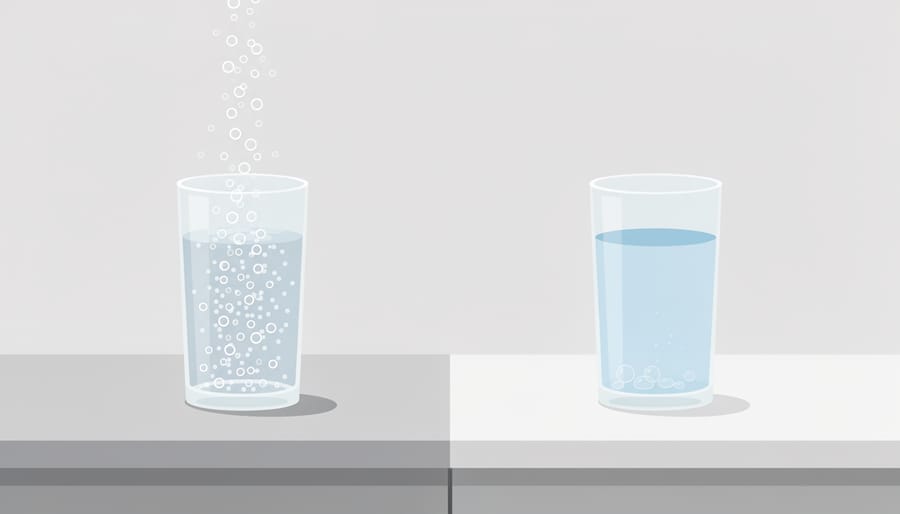
This is why the acidity is fleeting. A freshly poured glass of sparkling water has the most carbonic acid it will ever have. Let it sit until it’s flat, and the water drifts back toward neutral, ending up closer to what you’d pour from the tap.
Not All Bubbly Is the Same: Types of Sparkling Water
Walk down the bubbly aisle and you’ll see how many bottles claim to be the same thing. They aren’t, and the differences matter when you’re building a drink.
Here’s the quick rundown of the main players:
- Seltzer: Water carbonated with carbon dioxide and little else, so it tastes clean and neutral and lets other ingredients lead.
- Club soda: Carbonated water that often has minerals or salts added, which gives a faint savory edge that suits highballs.
- Sparkling mineral water: Water with its own mineral content, often a softer or more rounded fizz, and a distinct taste depending on the source.
- Tonic water: A sweetened, bittersweet mixer, much more flavored than the others and not interchangeable with plain bubbles.
Those added minerals and salts can shift flavor and may nudge acidity a little, though the carbonic acid from dissolved CO2 is the main driver in all of them. If you’re torn between two bottles, our guide to club soda vs sparkling digs into which one suits which drink.
Flavored versions bring their own twist. A bottle of flavored sparkling water may include added acids, such as citric acid, to deliver that tang. So a citrusy bottle can taste brighter and sharper than a plain one, even when the base water is similar.
Here’s a quick bar-side habit worth trying: grab whatever bubbly you have on hand and read the label. Do you see added minerals, salts, or flavor acids listed? Knowing what’s in your bottle tells you more about its taste, and its acidity, than the word “sparkling” ever will.
Does Fizzy Water Make Your Body Acidic? Dental Health and Diet Questions
Let’s tackle the big worry first: does sipping something acidic turn your whole body acidic? Not really. Your body keeps its own acid balance in tight check, and a glass of bubbly water doesn’t override that. The carbonic acid in your drink is a weak acid, formed when carbon dioxide and water react, and it’s gone from the equation once the fizz does.
Your teeth are a different story, and it’s a fair thing to wonder about. Health Canada’s drinking water guidance on pH includes sections on diet and pH, and on pH and dental caries, which tells you this is a topic taken seriously rather than a cause for panic. You can read more through Health Canada’s look at pH, diet, and dental caries if you want the source material.
In general terms, plain sparkling water tends to be a gentler choice than sugary or citrus-flavored fizzy drinks. Those add sugar, or extra acids like the citric kind, on top of the carbonation. Think of it like cocktails: a splash of soda in a highball is a very different proposition from a syrupy sour sipped all evening. If you’re curious about how café culture factors in, our piece on sparkling water and teeth digs into it.
A few habits worth knowing:
– Choose unflavored or lightly flavored options when bubbles are your daily drink.
– Check the label for added sugar or fruit acids.
– Pair your fizz with a meal rather than sipping it nonstop.
And if you have a sensitive mouth or a history of cavities, a quick chat with your dentist beats any general advice I can offer.
Why Sparkling Water’s Acidity Matters in Your Glass
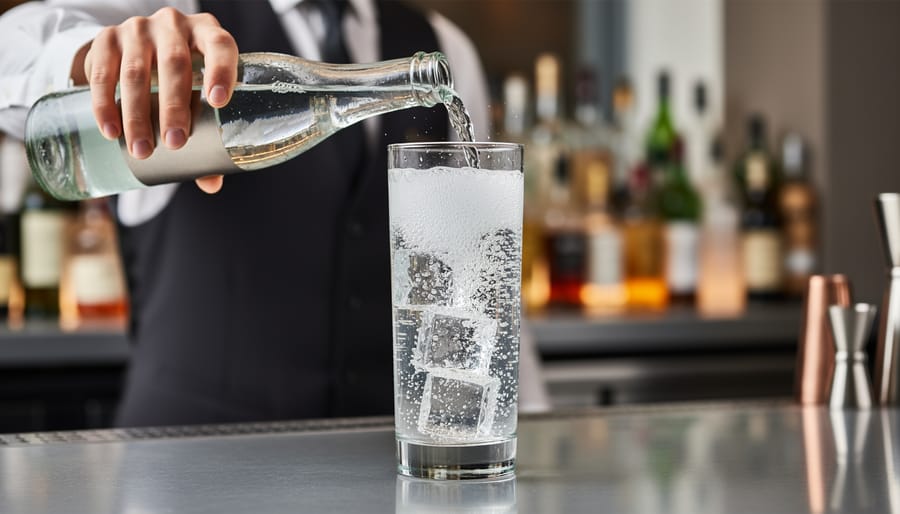
Here’s where the chemistry earns its keep behind the bar. The mild acidity from carbonic acid gives sparkling water a subtle bite, a lift on the tongue, and a sense of dryness that still water simply can’t deliver. It’s why a splash of soda can make a drink feel crisper and more refreshing without adding sweetness.
That gentle acidity plays beautifully with citrus and bitters. In a highball or a spritz, the bubbles sharpen bright lemon or lime notes while softening the edges of bitter ingredients, so everything feels more balanced. In a mocktail, where there’s no spirit to lend structure, sparkling water often does the heavy lifting. A tall, fizzy ginger cocktail is a good example: the carbonation lifts the spice and keeps the sweetness from feeling heavy.
A few habits help you keep that sparkle in the glass:
– Chill your sparkling water well before using it, since colder liquid holds onto its carbonation longer.
– Pour gently down the side of the glass or along a bar spoon, so you don’t knock the bubbles out.
– Add the sparkling water last, and stir once, lightly, rather than vigorously.
Here’s a little experiment for you. Make the same drink twice, once with still water and once with sparkling, using identical ingredients. Which one tastes brighter? Which feels smoother? Notice how the bubbles change the way the flavors land, and let me know what you find.
Sparkling Water Acidity: Your Questions Answered
Is carbonated water acidic?
Yes, but only mildly. When carbon dioxide dissolves in water, the two react to form carbonic acid, which is a weak acid. That’s the gentle bite you notice on your tongue.
What is carbonated water?
It’s simply water with carbon dioxide dissolved into it, whether added at a factory, by a soda siphon, or occurring naturally in some mineral springs. Club soda, seltzer, and sparkling mineral water all fall under this umbrella, each with slightly different mineral content or flavoring.
Does drinking acidic carbonated water make your body more acidic?
Not in any meaningful way. Your body manages its own acid balance, and the mild acidity of a glass of bubbles doesn’t override that. Health Canada’s pH guidance does include a section on diet and pH, so it’s worth reading if you want the official context.
Does sparkling water affect dental health?
Plain sparkling water is generally considered a gentler choice than sugary or citrus-flavored fizzy drinks, since flavored versions add their own acids. Health Canada’s pH guidance also addresses pH and dental caries, but for anything specific to your teeth, a quick chat with your dentist is the best move.
Still wondering about something that didn’t make the list? Chances are your question comes back to the same simple idea: sparkling water is mildly acidic, but the effect is gentle and fleeting. Check the label on your favorite bottle, and let your own curiosity guide the next glass you pour.
So, is sparkling water acidic? Yes, but only mildly. Carbon dioxide meets water, forms carbonic acid, and that weak acid fades as the bubbles escape. The effect is gentle and temporary, nothing like the punch of fresh citrus or vinegar.
Keep it a bar-friendly staple by reading labels, since flavored and mineral-heavy bottles can bring their own acids and salts, and by sipping in moderation. If a dental or dietary question nags at you, a quick chat with your dentist beats guesswork.
Now go play. Top your favorite highball, spritz, or mocktail with a well-chilled splash of sparkling water, then pour the same drink with still water and taste the difference for yourself. I’d love to hear what your go-to bubbly mixer is, or whether you’ve got a pH curiosity that’s been fizzing in the back of your mind.