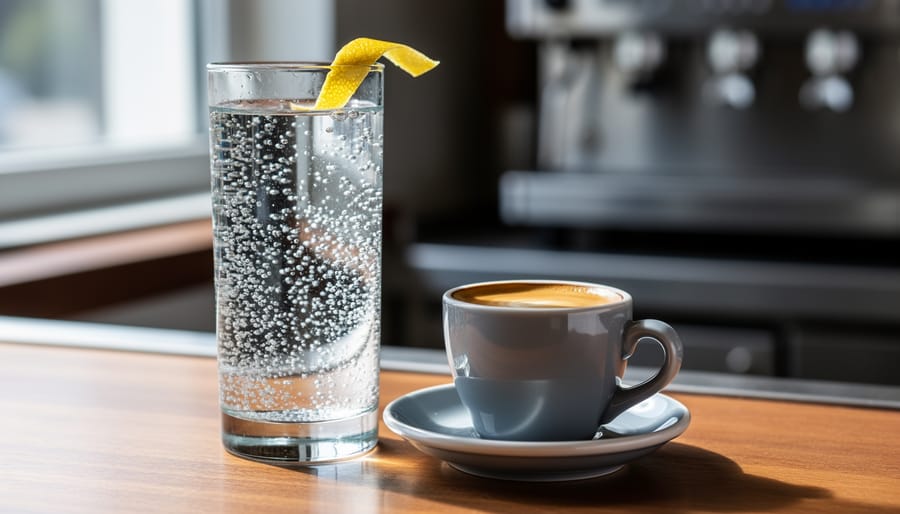
The espresso and sparkling water pairing sweeping Canadian cafés in 2026 serves two purposes: the bubbly water cleanses your palate between sips, letting you taste each layer of the espresso, and contrary to popular worry, plain sparkling water won’t destroy your enamel the way acidic sodas can. This dual-purpose trend has evolved from the traditional Italian palate cleanser into creative café menu items like espresso tonics, citrus-spiked sparklers, and even the playfully renamed “Canadiano” that swaps still water for fizz.
If you’ve been scrolling past those artfully photographed cafe posts showing a tiny espresso cup alongside a tall glass of bubbles, you’re seeing the visible edge of a broader shift in how specialty coffee shops approach the espresso experience. The practice borrows from classic cocktail technique: just as bartenders offer palate cleansers between tasting flights, baristas use sparkling water to reset your taste buds so the second half of your espresso hits as cleanly as the first sip. Brian, Senior Barista Trainer at Joe Coffee Company, points to this reset function as the reason many quality cafés automatically serve sparkling water with every espresso shot.
But the pairing has jumped beyond simple accompaniment. Canadian cafés are now blending espresso directly with tonic water, citrus sodas, and house-made sparklers, creating drinks that live somewhere between coffee and cocktail. And if you’ve hesitated because you’ve heard sparkling water erodes enamel, the science tells a different story than the one making the rounds on social media.
Why Cafés Serve Espresso With Sparkling Water
Walk into most Italian cafés and you’ll notice a small glass of sparkling water arrives alongside your espresso, a practice that dates back generations in European coffee culture. This pairing isn’t just tradition for tradition’s sake. The carbonated water serves a practical purpose: it cleanses your palate before the first sip, washing away lingering flavors from breakfast or a previous drink so you can fully appreciate the espresso’s complex notes. Think of it as hitting reset on your taste buds.
Brian, Senior Barista Trainer at Joe Coffee Company, explains that the practice also helps you distinguish between quality beans and mediocre ones. When your palate is clean, you can detect whether that espresso has bright acidity, chocolate undertones, or fruity notes versus just bitter harshness. The sparkling water essentially gives each shot a fair audition.
Beyond the sensory benefits, the water plays a hydration role. Espresso is concentrated, and a small glass of water balances the intensity while preventing the dry mouth that strong coffee sometimes triggers. Some coffee drinkers also sip the sparkling water between espresso shots during a tasting session, using it to refresh their palate so the second or third cup tastes as vibrant as the first.
Canadian cafés have embraced this European custom, but many are taking it further by incorporating the sparkling element directly into the drink itself, creating espresso tonics and sparkling coffee sodas that transform the traditional accompaniment into the main event.
Canadian Cafés Elevating the Espresso-Sparkling Water Pairing
1. Balzac’s Coffee: Award-Winning Citrus and Blackberry Espresso Tonics
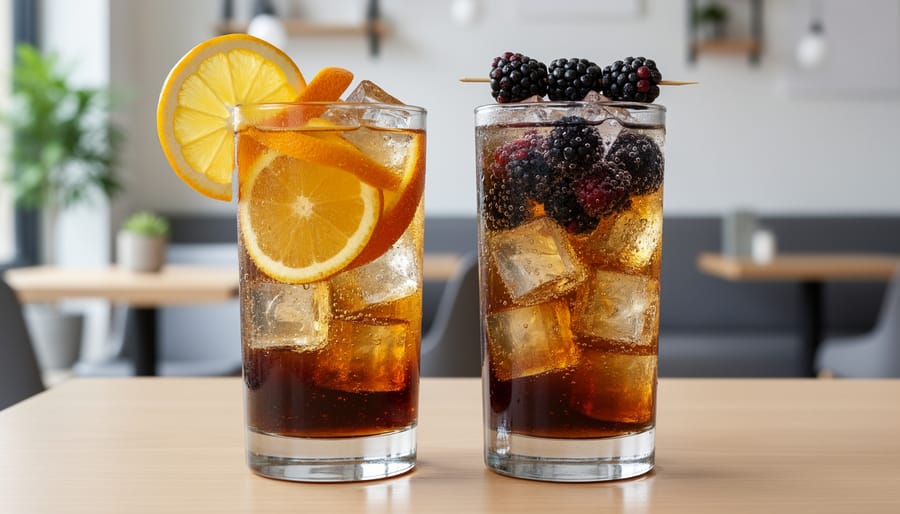
Balzac’s Coffee earned recognition for its Citrus Espresso Tonic long before the drink became a café staple across Canada. The award-winning blend layers bright citrus notes over chilled tonic water and a shot of their signature espresso, creating a drink that tastes simultaneously sharp and smooth. What sets Balzac’s version apart is the balance: the citrus doesn’t overshadow the coffee, and the tonic’s bitterness complements rather than clashes with the espresso’s natural acidity.
The newest addition to their lineup is a blackberry variation on the original formula. This version swaps citrus for blackberry while maintaining the same structural approach: fruit, fizz, and espresso in careful proportion. The blackberry brings a deeper, slightly earthier sweetness that pairs particularly well with darker roasts. It’s a quieter drink than the citrus tonic but no less considered.
You’ll find both versions at Balzac’s locations across Ontario, though availability can vary by shop. The drinks work year-round, but the blackberry tonic feels especially fitting as summer edges into fall. If you’re new to espresso tonics, the citrus version offers a clearer introduction to the format. If you already know you like the category, the blackberry variation is worth the trip for its more nuanced flavor profile. Ask your barista which espresso blend they’re pulling that day; it’ll give you a sense of whether to expect brighter or richer coffee notes underneath the fruit.
2. Temple Coffee: Spring 2026 Sparkling Grapefruit Soda With Espresso
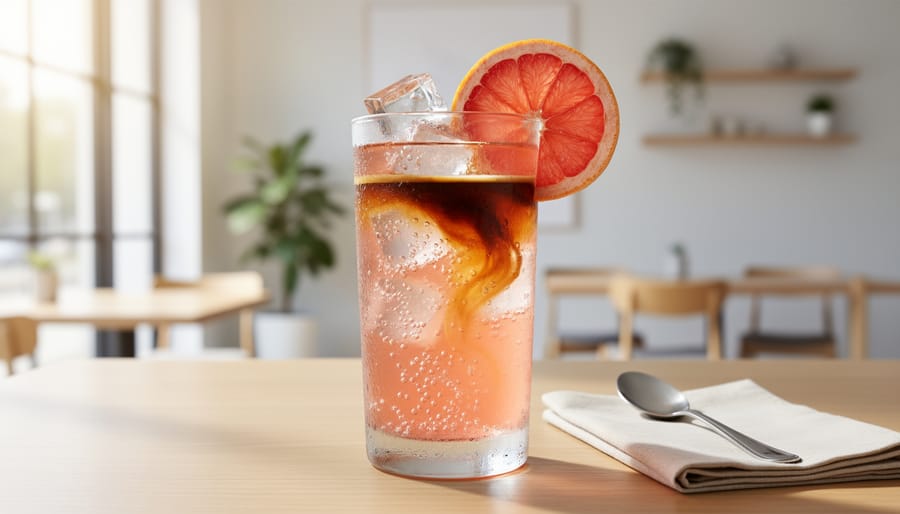
Temple Coffee has made a name for itself by rotating seasonal drinks that showcase what’s fresh and vibrant, and their Spring 2026 menu delivers exactly that. The standout? “Rise and Shine,” a sparkling grapefruit soda paired with your choice of espresso or matcha. It’s a drink that leans into the citrus-forward brightness of the season while giving you the option to tailor the caffeine experience to your mood.
What makes this pairing work is the natural tartness of grapefruit, which cuts through espresso’s richness without overwhelming it. The sparkling element adds lift and makes each sip feel refreshing rather than heavy, perfect for those transitional spring mornings when you want something energizing but not cloying. If you’re not in the mood for coffee, the matcha variation offers a different kind of depth, with the green tea’s grassiness playing nicely against the grapefruit’s acidity.
Temple’s approach here is a reminder that espresso and sparkling water don’t have to stick to the classic tonic formula. By swapping in a grapefruit soda base, they’ve created something that feels more like a craft soda bar than a traditional café, yet it still honors the palate-cleansing spirit of the original pairing. It’s a seasonal limited run, so if you’re curious, spring is the time to visit.
3. Grindhouse 219: Espresso Tonics Join the 2026 Drink Lineup
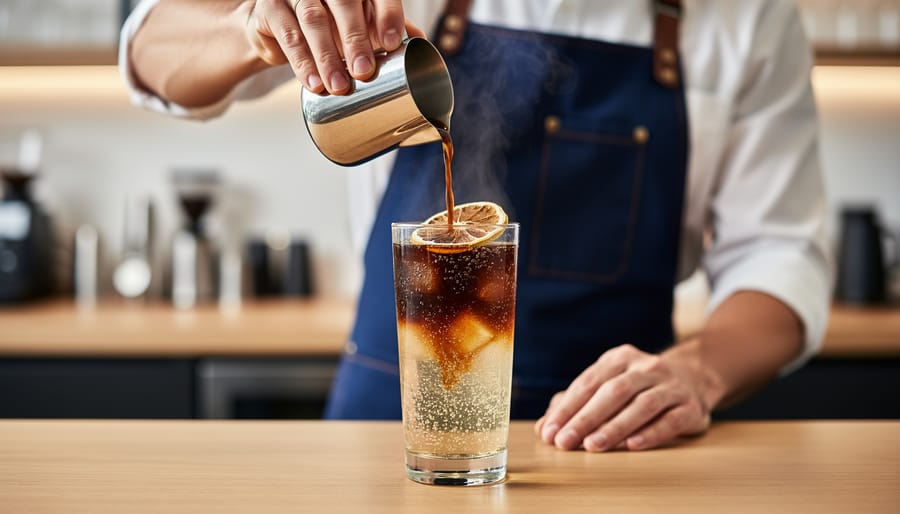
Grindhouse 219 caught the espresso tonic wave in 2026, adding this refreshing hybrid to their drink lineup as part of a broader menu refresh. What sets their version apart is the attention to balance: they build each drink with Fever-Tree tonic water, known for its crisp, less-sweet profile, combined with a double shot of espresso, half an ounce of house-made simple syrup, and a dried lemon slice as garnish. The result is a drink that bridges coffee and cocktail culture, offering the bitter complexity of espresso tempered by tonic’s quinine bite and a subtle citrus note.
The house-made simple syrup is key here. While some cafés lean on off-the-shelf syrups, Grindhouse’s in-house version lets them control sweetness, ensuring the espresso and tonic remain the stars rather than drowning in sugar. The dried lemon garnish isn’t just decoration, it adds a concentrated citrus aroma that hits before the first sip, priming your palate for the layered flavours below.
If you’re visiting, ask whether they’re using a specific espresso roast for the tonics. Some shops rotate single-origin pulls that bring out fruity or floral notes, which play beautifully against tonic’s bitterness. It’s also worth ordering it over plenty of ice; as it melts, the drink evolves, softening the intensity and stretching out the experience.
4. The Baker Next Door RWC: Proyecto Diaz Espresso Meets Fever-Tree
The Baker Next Door RWC takes a particularly thoughtful approach to their espresso tonic, treating it as a craft coffee collaboration rather than just another trendy menu addition. Their version pairs Proyecto Diaz espresso with Fever-Tree tonic water, both premium choices that signal a commitment to quality ingredients over convenience.
What sets this shop apart is the intentional spotlight on the coffee itself. By featuring Proyecto Diaz espresso, they’re showcasing a specialty roaster known for direct trade relationships with Colombian farmers. This means the espresso brings distinctive flavor notes that don’t get buried under the tonic’s quinine bitterness, you’re actually tasting the coffee, not just caffeine with bubbles.
The preparation method is straightforward but effective: Fever-Tree tonic water poured over ice, finished with a shot of the Proyecto Diaz espresso. The simplicity allows both components to shine, and using Fever-Tree specifically matters because its lower quinine content and natural botanical blend won’t overpower the espresso’s more delicate fruit and chocolate notes.
If you appreciate knowing the story behind your drink, where the beans come from, why that particular tonic was chosen, The Baker Next Door delivers that narrative along with the beverage. It’s the kind of place where the barista can tell you about the Colombian farm behind your espresso, making the whole experience feel more connected than a standard café visit.
5. Joe Coffee Company: Educational Espresso Service

Joe Coffee Company takes a refreshingly educational approach to the espresso-sparkling water pairing. Rather than turning it into a menu gimmick, they serve every espresso with sparkling water by default and train their baristas to explain why. Brian, Senior Barista Trainer at Joe, walks customers through the science: the sparkling water cleanses your palate before that first sip, letting you taste the espresso’s full flavour profile without interference from lingering tastes in your mouth. It’s not about trends or Instagram moments. It’s about respecting the coffee itself.
What sets Joe Coffee apart is their insistence on treating the pairing as a teaching opportunity. When you order an espresso, you’ll often get a brief explanation of how to use the water. Sip it first to reset your palate, then approach the espresso. Some guests prefer to alternate sips, which is equally valid. The staff won’t lecture you on a “correct” method, but they will share the traditional reasoning so you can decide how to enjoy it.
If you’re new to serious espresso or curious about why this pairing matters beyond novelty, Joe Coffee Company offers one of the most welcoming entry points. Their focus on education over Instagram-ready drinks makes them essential for anyone wanting to understand the foundations before diving into flavoured tonic variations.
Practical Information for Café Hopping
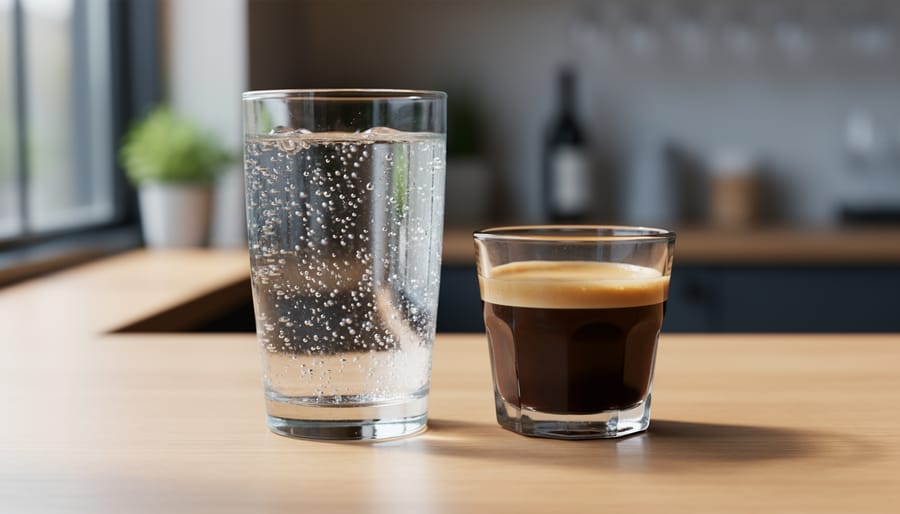
When you walk into any of these cafés, the espresso-sparkling water pairings typically arrive in one of two ways: the traditional service (espresso in a demitasse with a separate glass of sparkling water on the side) or the blended version (espresso tonic or similar mixed drinks served over ice in a tall glass). Most baristas are happy to explain their approach if you’re new to the concept, especially at specialty shops like Joe Coffee Company where staff training emphasizes the educational aspect of the pairing.
For the best experience ordering these drinks:
- Ask whether the sparkling component uses tonic water, plain sparkling water, or flavored soda, the distinction matters for both taste and dental impact
- Request your espresso tonic “less sweet” or “no syrup” if you prefer to taste the coffee more prominently
- Try the traditional side-by-side serving first before moving to mixed versions, it teaches you how the pairing works
- Inquire about house-made elements like syrups or garnishes, which often change with the seasons
Seasonal availability plays a role in these offerings, with citrus-forward versions peaking in spring and summer (like Temple Coffee’s grapefruit soda pairing) while some shops rotate their espresso tonic recipes throughout the year. The difference between club soda vs sparkling water matters here, tonic water brings sweetness and quinine bitterness, plain sparkling water stays neutral, and club soda adds subtle salinity. Most cafés default to either Fever-Tree tonic or quality sparkling water brands, though asking about their specific choice can reveal interesting sourcing decisions that affect the final flavor profile.
The Tooth Truth: Is Sparkling Water Bad for Your Teeth?
If you’re loving the crisp fizz of an espresso tonic, you might be wondering whether all that sparkling water is doing your teeth any favors. Let’s cut through the noise with what the research actually shows.
Plain sparkling water sits at a pH of around 5 to 6, making it mildly acidic. That’s more acidic than still water (which clocks in at a neutral 7), but significantly less harsh than the beverages most of us drink without a second thought. Research confirms that sparkling water may erode enamel over time, particularly when consumed frequently throughout the day. The carbonation process creates carbonic acid, which can soften the tooth surface.
Here’s how these drinks stack up from a dental perspective:
| Beverage | Typical pH Range | Enamel Risk |
|---|---|---|
| Still Water | 7.0 (neutral) | None |
| Plain Sparkling Water | 5.0-6.0 | Low |
| Espresso | 4.85-5.10 | Low to Moderate |
| Tonic Water | 2.5-3.5 | Moderate to High |
| Citrus Sodas | 2.4-3.0 | High |
The real troublemakers are the espresso tonics and citrus-sparkling hybrids popping up on café menus. Studies examining coffee and carbonated drinks show that combining acidic beverages can increase the erosive potential, especially when sugar or citrus enters the mix. Tonic water, thanks to added citric acid, drops into the pH 2.5 to 3.5 range, which puts it in similar territory to fruit juice or soda.
Does this mean you should skip the trend altogether? Not necessarily. Drinking these beverages quickly rather than sipping for an hour reduces acid exposure. Following up with plain water helps neutralize your mouth’s pH. The traditional European practice of serving sparkling water with espresso may actually offer a small benefit: the water helps rinse away coffee residue and stimulates saliva production, which naturally protects enamel. Just don’t swish the fizzy stuff around like mouthwash, and you’ll be fine enjoying your espresso tonic without turning it into a dental drama.
Local Tips for Exploring the Trend
Start by chatting with baristas about their house-made syrups and tonic brands. Most cafés serving espresso tonics experiment with different Fever-Tree varieties or local alternatives, and staff love discussing what makes their version unique. Ask when they rotate flavors, many shops like Temple Coffee tie their sparkling espresso drinks to seasonal ingredients, so what’s on tap in spring won’t be there come fall.
If you’re recreating the pairing at home, make sparkling water with a home carbonator for complete control over fizz levels, or buy sparkling water in Canada if you want to sample store-bought options first. Pull a fresh double shot of espresso and pour it over ice-filled tonic water for the simplest version, adding a squeeze of citrus if you like. The same approach works for other carbonated espresso experiments, matcha latte at home enthusiasts often swap matcha into the template once they’ve nailed the basic espresso tonic.
Try different ratios before settling on what tastes right. Some prefer a one-to-one espresso-to-tonic split; others like more tonic to soften the bitterness. Keep notes on what you’ve tried so you can replicate favorites or steer clear of combinations that didn’t land.
Frequently Asked Questions
Is sparkling water safe for teeth?
Plain sparkling water is generally safe for teeth because it’s only slightly more acidic than still water, with a pH around 5 to 6, compared to still water’s neutral 7. The risk comes from added citrus, sugars, or flavourings that lower the pH further, so if you’re concerned about enamel, stick to unflavoured varieties and avoid sipping slowly over long periods.
Why do Italians drink sparkling water with espresso?
The traditional practice serves as a palate cleanser, preparing your taste buds to fully appreciate the espresso’s nuanced flavours by clearing away any lingering tastes. It also helps refresh the mouth between sips when savouring a well-crafted shot.
What’s the difference between espresso tonic and espresso with sparkling water?
Espresso served with sparkling water is a side-by-side pairing where you sip the water separately to cleanse your palate, while an espresso tonic is a mixed drink combining espresso, tonic water, ice, and often simple syrup or citrus for a refreshing beverage. The former enhances the tasting experience, the latter creates a completely new drink.
Can I make espresso tonics at home?
Absolutely, and it’s straightforward. Pull a double shot of espresso, fill a glass with ice and quality tonic water like Fever-Tree, pour the espresso over top, add half an ounce of simple syrup if desired, and garnish with citrus. Experiment with different tonic brands or what to choose for the sparkling water base to find your preferred flavour profile.
These questions reflect what most people wonder when they first encounter the trend, whether they’re trying it at one of the cafés mentioned earlier or considering making it themselves. The beauty of both the traditional pairing and the tonic variation is their simplicity, so don’t overthink it when you’re ready to experiment.