
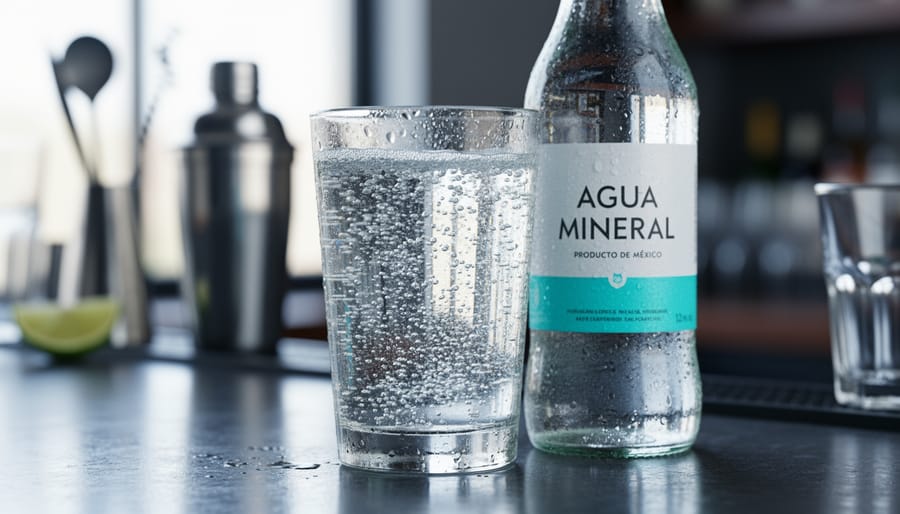
Mexican sparkling water, particularly from brands rooted in Monterrey, has become the secret weapon behind some of the best cocktails you’re making right now. If you’ve ordered a crisp Paloma or a refreshing Ranch Water at a bar recently and wondered why it tasted so much better than your home version, the answer is probably in the bubbles. These mineral waters bring an aggressive carbonation and subtle mineral profile that transforms highballs from acceptable to unforgettable.
Topo Chico has led this charge since 1895, bottled at the source in Monterrey and building a cult following that eventually caught fire in cocktail bars across the United States. What started as a regional favorite became the backbone of modern tequila cocktails, with bartenders swearing by its ability to hold carbonation longer and add a slight mineral complexity that plays beautifully with citrus and agave spirits.
The appeal goes beyond Topo Chico itself. Mexican sparkling waters share a common thread: they’re typically higher in natural minerals and more aggressively carbonated than their European counterparts, making them ideal for standing up to bold spirits and fresh citrus. You’ll find them in 12oz glass bottles, which have become almost as iconic as the drinks they create. The category now includes flavored options like Topo Chico Sabores, made with real fruit juice and herbal extracts, opening new possibilities for easy variations on classic serves.
Whether you’re chasing the perfect Paloma recipe or simply want to understand why bartenders reach for these bottles, Mexican sparkling water represents a genuine upgrade to your home bar.
What Makes Mexican Sparkling Water Different
The first thing you notice when you crack open a bottle from Monterrey is the sound, a sharp hiss that tells you this isn’t your average sparkling water. Mexican sparkling water, particularly Topo Chico, delivers an intensity of carbonation that makes it stand out in any highball or spritz. That aggressive sparkle comes from the natural mineral springs where it’s been sourced from Monterrey since 1895 a heritage that gives it both character and consistency.
What sets it apart from the gentler bubbles you’ll find in many commercial sparkling waters is the mineral composition itself. The water emerges from volcanic rock formations with a distinct blend of calcium, magnesium, and sodium that you can actually taste, a slightly mineralized backbone that doesn’t vanish the moment you add spirits or citrus. This matters more than you’d think when you’re building cocktails. Club soda vs sparkling water becomes a real consideration once you understand how these minerals interact with your ingredients, enhancing rather than diluting the flavors you’re trying to showcase.
The glass bottles matter too. They preserve that carbonation longer and maintain the water’s crispness better than plastic alternatives, which is why serious bartenders keep them chilled and crack them fresh for each round. The volcanic mineral profile creates a subtle salinity that plays beautifully with agave spirits and citrus, a natural fit for Mexican cocktail traditions that have been using this water for generations. When you’re mixing a Paloma or Ranch Water, you’re not just adding fizz; you’re adding a layer of terroir that connects your drink to a specific place and tradition.
How Mexican Sparkling Water Elevates Your Cocktails
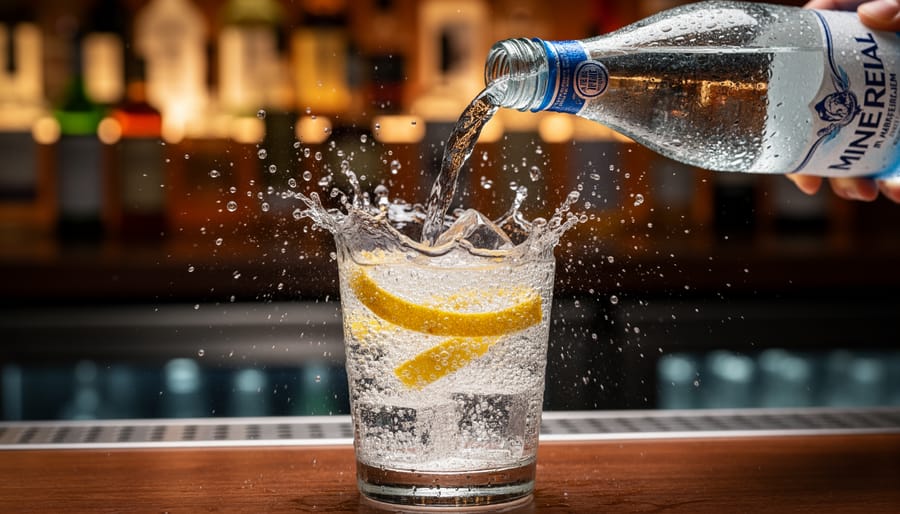
The first time I swapped Topo Chico into a simple gin and tonic, I noticed something immediately: the drink stayed lively longer. That aggressive carbonation doesn’t just disappear after the first sip, it holds up through the glass, keeping each taste as bright as the first. That persistence is what separates Mexican sparkling water from gentler alternatives in cocktail work.
Carbonation intensity matters more than most home bartenders realize. When you’re building a highball or topping a spritz, you’re not just adding bubbles for texture. You’re managing dilution and mouthfeel throughout the drink’s lifespan. Topo Chico’s fierce sparkle means your cocktail resists going flat even as ice melts, maintaining that sharp, refreshing quality that makes a properly constructed drink satisfying to the last drop. I’ve found this especially valuable with spirit-forward highballs where you want the carbonation to cut through the alcohol heat without fading.
The mineral content plays a subtler but equally important role. Sparkling waters aren’t all neutral canvases, they carry distinct mineral profiles that interact with your other ingredients. The minerals in Topo Chico add a slight salinity and depth that complement citrus particularly well, which explains why it works so beautifully in Palomas and Ranch Waters. It’s not about tasting minerality directly; it’s about how those trace elements enhance and round out the flavor profile you’ve built with your spirits and modifiers.
Then there’s the glass bottle factor. I used to think this was marketing, but after years of side-by-side comparisons, the difference is real. Carbonation holds better in glass, and you can taste it. A bottle from the back of your fridge will still have that signature bite, while plastic alternatives often feel softer and less defined by comparison. For cocktail work where carbonation is a structural element rather than an afterthought, that reliability matters. You’re not gambling on whether your topper will deliver, you know it will.
Classic Cocktails That Shine With Mexican Sparkling Water
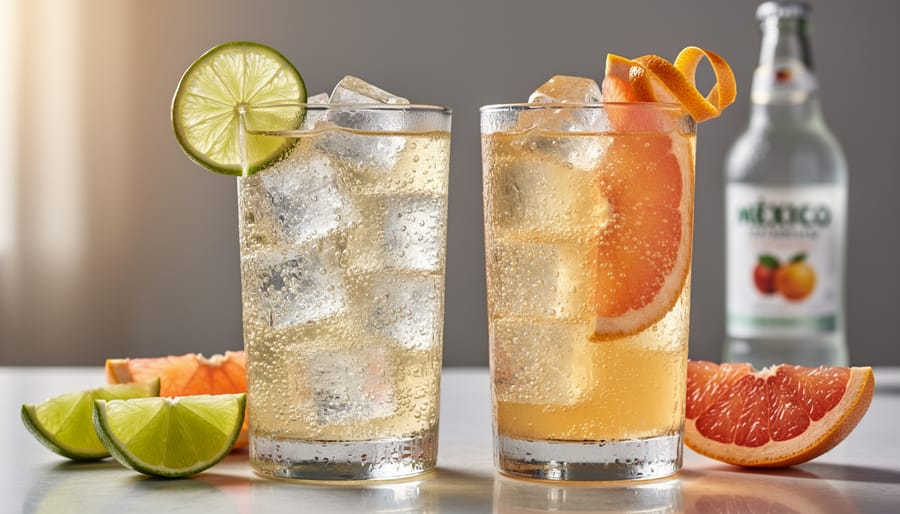
The Perfect Paloma
The Paloma deserves better than the overly sweet grapefruit soda it usually gets. When you build this drink with fresh grapefruit juice and Topo Chico, you get something closer to what you’d find in a proper cantina in Mexico City, bright, balanced, and dangerously refreshing.
Start with 2 ounces of blanco tequila in a tall glass filled with ice. Add 1 ounce of fresh grapefruit juice and half an ounce of lime juice. Here’s where technique matters: pour the juice over the tequila first, then top with 4 to 5 ounces of Topo Chico, pouring gently down the side of the glass to preserve the carbonation. A quick stir, just one rotation, integrates everything without killing the bubbles.
Salt the rim if you like, but I prefer a pinch of coarse salt dropped directly into the drink. It dissolves gradually, creating pockets of salinity that play against the grapefruit’s bitterness and the tequila’s agave sweetness. The real magic happens in that first sip, when the aggressive bubbles carry all those flavors across your palate at once. That’s the Topo Chico difference, a flatter water just sits there.
Ranch Water and Beyond
Ranch Water started as a West Texas bartender’s simple three-ingredient formula, tequila, lime, and Topo Chico, and became a regional obsession before spreading nationwide. The drink’s genius lies in its restraint: two ounces of blanco tequila and half an ounce of fresh lime juice stretched over ice with a full 12oz bottle of Mexican sparkling water. The aggressive carbonation carries the agave flavors without diluting them, while the minerals add a subtle complexity that plain soda water can’t match.
Once you’ve mastered the basic template, variations open up naturally. Try mezcal instead of tequila for a smokier profile, or add a splash of grapefruit juice to bridge the gap between Ranch Water and Paloma territory. The Sunny Mexico drink takes this approach further with pineapple and coconut elements that still benefit from Topo Chico’s assertive fizz.
The key across all these riffs is respecting the sparkling water’s role as an equal partner, not just filler. Use the whole bottle per drink, serve it ice-cold, and pour it last to preserve maximum carbonation.
Elevated Highballs
The highball framework, spirit, ice, sparkling water, seems almost too simple to elevate, but Mexican sparkling water changes that equation entirely. I’ve found that Topo Chico’s aggressive carbonation and mineral backbone turn even a basic gin and tonic into something that commands attention, adding texture and grip that standard club soda can’t match.
The key is treating the sparkling water as an active ingredient rather than just filler. Build your drink in a tall glass over ice, add your spirit (2 ounces works well), then top slowly with chilled Topo Chico to preserve those vigorous bubbles. A tequila highball with lime becomes infinitely more interesting when the minerals amplify the agave’s earthy notes. Whisky and sparkling water, an old-school pairing, gains complexity you’ll actually want to sip slowly. The glass bottle format helps here, you get fresh carbonation every time, which matters when the fizz is doing real flavor work.
Flavored Options and Creative Applications
Topo Chico Sabores bring a new dimension to the cocktail toolkit. These flavored varieties are made with real fruit juice and herbal extracts, offering natural taste without artificial sweeteners. That matters when you’re building drinks, you get authentic fruit character that works with spirits rather than competing.
I’ve found Sabores particularly useful when I want a hint of fruit without the intensity of a full juice component. A lime-flavored Sabores, for instance, can replace plain sparkling water in a gin and tonic, adding subtle citrus that enhances the botanicals without overwhelming them. The tangerine variety pairs beautifully with tequila or mezcal, creating a shortened Paloma-style drink that requires nothing more than two ounces of spirit and ice.
The versatility extends beyond simple substitutions. When making spritzes, I’ll use a flavored Sabores as the base and add just a splash of vermouth or liqueur. The watermelon variety works remarkably well with vodka and fresh mint, creating a light, crushable highball perfect for warm afternoons. Grapefruit Sabores can anchor a low-ABV aperitif when combined with a bitter liqueur and a wine-based aperitivo.
Think of these as somewhere between plain sparkling water and a full mixer. They won’t replace fresh juice in craft cocktails where bright acidity is essential, but they excel when you want a whisper of flavor with that signature aggressive carbonation. Try pairing berry varieties with gin, tropical flavors with rum, or explore how blood orange sparkling water brings a sophisticated edge to whiskey highballs.
The same minerals and sparkle intensity that make Topo Chico work in classic cocktails carry through to the Sabores line, giving you consistency across your home bar setup.
Where to Find It and What to Expect
Topo Chico has become easier to find across North America in recent years, showing up in grocery stores, liquor shops, and even convenience stores alongside mainstream sparkling water brands. You’ll typically see it in 12oz glass bottles, sold individually or in multi-packs. Pricing varies by retailer and quantity, expect to pay somewhere between $9.49 and $23.50 depending on whether you’re buying a single bottle or a case, and where you’re shopping. While that’s higher than budget sparkling waters, the quality justifies the cost when you’re building cocktails that deserve proper carbonation.
Look for bottles with recent production dates when possible, and avoid any with damaged caps or leaks. The glass packaging protects carbonation better than plastic, which is why Topo Chico maintains that signature aggressive fizz. If you’re fortunate enough to have a local Mexican market or specialty grocer, they often stock it at better prices than mainstream chains. Some cocktail enthusiasts make sparkling water at home for everyday use, but I still keep Topo Chico on hand specifically for cocktails where that mineral complexity and carbonation intensity make a real difference. The flavored Sabores varieties are gradually expanding distribution too, though availability remains spotty outside major urban centers.
You’ve got the knowledge, the recipes, and now the secret weapon that ties them all together. Mexican sparkling water isn’t just another mixer to stock behind your bar. It’s the difference between a good drink and one that makes people pause mid-sip and ask what you did differently.
The aggressive carbonation, the mineral backbone, the way it amplifies citrus and balances spirits without getting in the way, these aren’t marketing claims. They’re real differences you’ll taste in your first Paloma or Ranch Water. And once you experience how that 1895 Monterrey spring water transforms a simple highball, you won’t go back to flat compromises.
Grab a case of those 12oz glass bottles, crack open the cocktail recipes here on Droogle Drinks, and start experimenting. Try the classics first, then push into your own creations. Mix with the Sabores varieties. Find your favorite combinations. Then come back and tell us what worked, because the best cocktail discoveries happen when we share what we’ve learned, one perfectly carbonated drink at a time.


