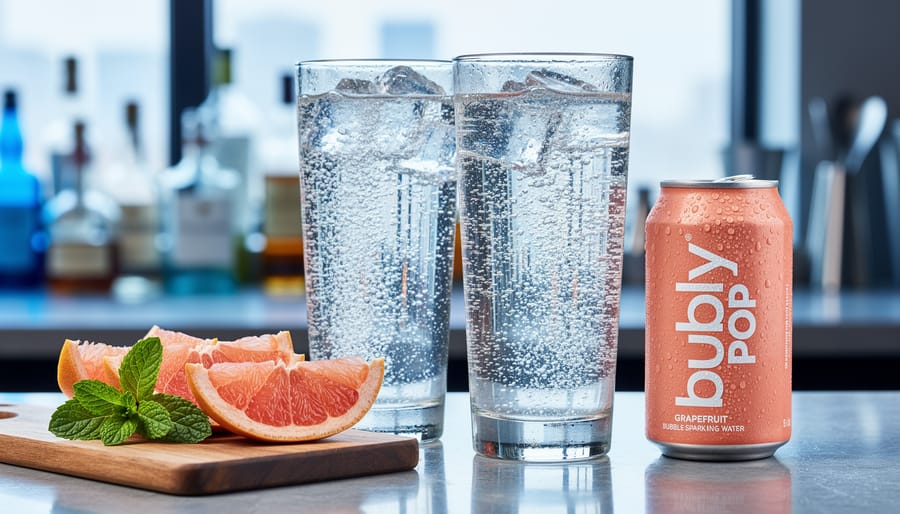
Bubble sparkling water refers to the category of lightly carbonated, fruit-flavored waters that have surged in popularity as both standalone refreshments and versatile cocktail mixers. Unlike traditional club soda or seltzer, these products deliver subtle fruit essences without added sugars or artificial sweeteners, making them ideal for bartenders who want to add fizz and a hint of flavor without overwhelming a cocktail’s balance. The name “bubble” has become synonymous with brands like bubly, which offers an extensive range of flavors now widely available in Canada, including varieties packaged in convenient 12 x 355 ml packs and even mini cans perfect for single-serve mixing.
I first started experimenting with bubble sparkling water behind the bar about three years ago when a guest asked for a lighter alternative to tonic in her gin and tonic. I reached for a can of grapefruit bubly, and the result was a revelation: the drink had all the effervescence and visual appeal of the original but with a cleaner, brighter flavor profile that let the botanicals shine through. Since then, I’ve watched these sparkling waters evolve from grocery store novelties into legitimate bar ingredients, especially with the recent launch of bubly POP, a slightly sweeter soda-style option available exclusively in Canada in berry, black cherry, and lemon lime flavors.
The distinction matters because your choice between a standard sparkling water and a bubble variety can completely change a cocktail’s character, and understanding when to reach for each will expand your mixing repertoire significantly.
What Makes Bubble Sparkling Water Different
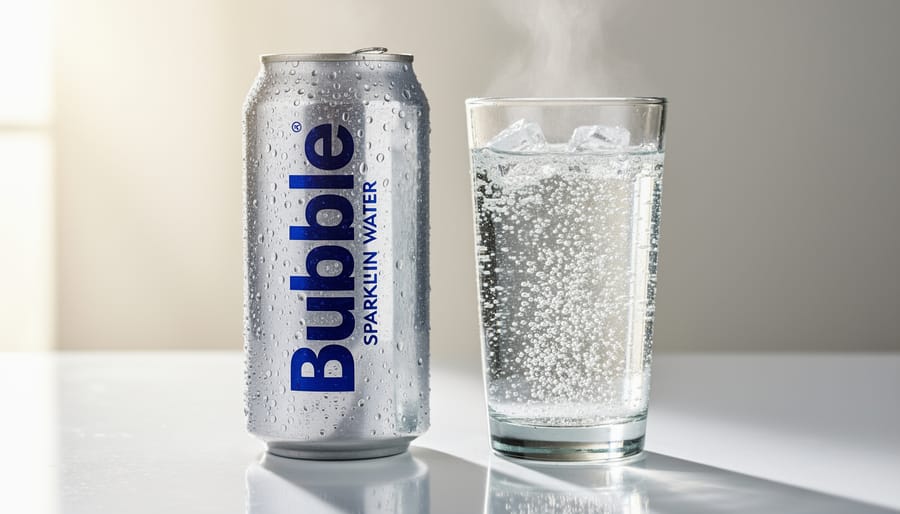
Walk into any Canadian grocery store and you’ll spot them immediately, those brightly colored cans with lowercase, bubbly lettering that practically smile at you from the shelf. Bubble sparkling water brands like bubly have redefined what carbonated water can be, ditching the clinical image of traditional seltzers for something far more approachable and fun. These aren’t your grandfather’s club sodas. They’re designed to feel like a treat, not a compromise.
The difference starts with flavor philosophy. While club soda vs sparkling water debates often center on mineral content and carbonation intensity, bubble sparkling waters focus on bold, fruit-forward taste without any sugar, calories, or artificial sweeteners. bubly and similar brands deliver recognizable fruit flavors, think black cherry, mango, strawberry, that actually taste like the fruit, not a lab’s interpretation of it. The carbonation is lively but not aggressive, making these waters easy to sip straight or mix into cocktails without overwhelming delicate spirits.
Then there’s the branding. The lowercase aesthetic, playful can messages, and vibrant color palettes signal a deliberate shift toward approachability. This isn’t premium water trying to impress you with mountain glaciers or exotic minerals. It’s sparkling water that knows how to have a good time, and that energy translates perfectly into home bartending.
In Canada, bubly has carved out a distinctive presence with options tailored to local tastes. The brand’s core lineup is sold in 12 x 355 ml packs, perfect for keeping your fridge stocked for spontaneous mixing sessions. bubly POP, a new soda now available exclusively in Canada, offers berry, black cherry, and lemon lime varieties for those wanting a touch more sweetness. For cocktail enthusiasts, unique flavors like Lemon Sorbet bring an unexpected creamy citrus note that elevates everything from gin drinks to tequila spritzes. If you’re wondering where to buy bubly in your area, the brand’s widespread availability makes experimentation easy.
What sets these bubble waters apart for bartenders is consistency. Each can delivers the same flavor intensity and carbonation level, eliminating the guesswork that comes with fresh citrus or homemade syrups. You know exactly what you’re getting, which means you can build reliable recipes that work every time.
Why Bubble Sparkling Water Is Perfect for Cocktails
I stumbled onto bubble sparkling water’s cocktail potential almost by accident last summer. A friend showed up to a backyard gathering with a case of lemon-flavored bubble water, and when we ran low on tonic, I grabbed one to top off my gin and lime juice. The result was unexpectedly brilliant, bright citrus notes that complemented the gin’s botanicals without the quinine bitterness or added sugar of tonic. That moment shifted how I think about mixers entirely.
The mixology advantages are hard to ignore. Bubble sparkling waters deliver clean, fruit-forward flavors that enhance spirits rather than compete with them. Unlike heavily sweetened sodas or syrup-laden mixers, these waters add aromatic complexity without dumping sugar into your glass. A berry bubble water brings vibrant fruit character to vodka or gin cocktails without needing simple syrup or muddled fruit, while black cherry variations lend depth to whiskey drinks without overpowering the spirit’s inherent flavors.
Carbonation consistency matters more than most home bartenders realize. Bubble waters maintain reliable fizz from first pour to last, giving you predictable texture in every drink. The 355 ml can format works perfectly for cocktails, enough for two generous servings or three measured highballs without waste. Some brands even offer mini cans, ideal for single-serve cocktails or testing flavor combinations before committing to larger batches.
The zero-sugar formulation gives you complete control over sweetness levels. You decide how much (or how little) sweetener goes in, tailoring each cocktail to personal preference rather than working around a mixer’s built-in sugar content. That flexibility transforms bubble sparkling water from simple fizz into a genuine mixology tool.
Popular Cocktails Using Bubble Sparkling Water
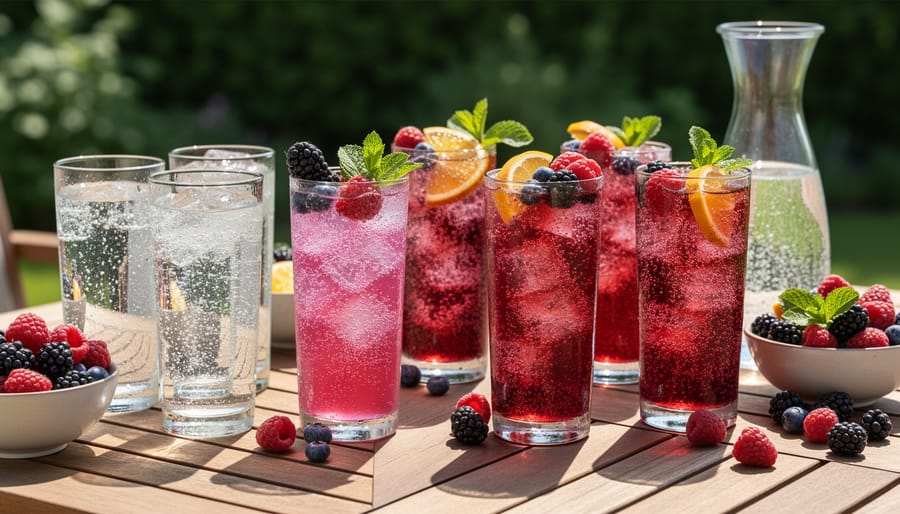
Berry Vodka Spritz
This spritz captures summer in a glass. Start with two ounces of quality vodka in a wine glass filled with ice. Add a handful of fresh mixed berries, blueberries, raspberries, and blackberries work beautifully, and gently muddle them just enough to release their juices without pulverizing the fruit. Pour in half an ounce of elderflower liqueur (St-Germain is my go-to), then top with chilled berry-flavored bubble sparkling water like bubly POP berry. The 355 ml can size gives you plenty for a generous pour with leftovers for a second round.
Give it a gentle stir to blend the elderflower with the berry notes. The bubble water’s clean carbonation lifts the muddled fruit flavors without adding sweetness, while the elderflower brings a delicate floral complexity that vodka alone can’t achieve. Garnish with a few skewered berries and a sprig of fresh mint. A large wine glass or coupe shows off the jewel-toned color and gives the bubbles room to dance. It’s elegant enough for guests but simple enough to make on a Tuesday evening.
Black Cherry Whiskey Highball
The Black Cherry Whiskey Highball takes the beloved two-ingredient classic and adds a layer of sophistication that feels both modern and timeless. Pour two ounces of bourbon or rye whiskey over fresh ice in a tall glass, I prefer a Collins glass for the full visual effect as the dark spirit mingles with the cherry-tinted bubbles. Add two dashes of Angostura bitters for that aromatic complexity, then top with chilled black cherry bubble water (the bubly version works beautifully here). The gentle fruit notes complement whiskey’s natural sweetness without masking its character.
Ice matters more than you might think in a highball. Large cubes melt slower and keep your drink cold without diluting it too quickly, letting the black cherry flavor shine through from first sip to last. Give it one gentle stir to distribute the bitters, garnish with a Luxardo cherry if you’re feeling fancy, and serve immediately. This is the kind of drink that converts people who claim they don’t like whiskey, it’s approachable, refreshing, and surprisingly complex for such a simple build.
Lemon Sorbet Gin Collins
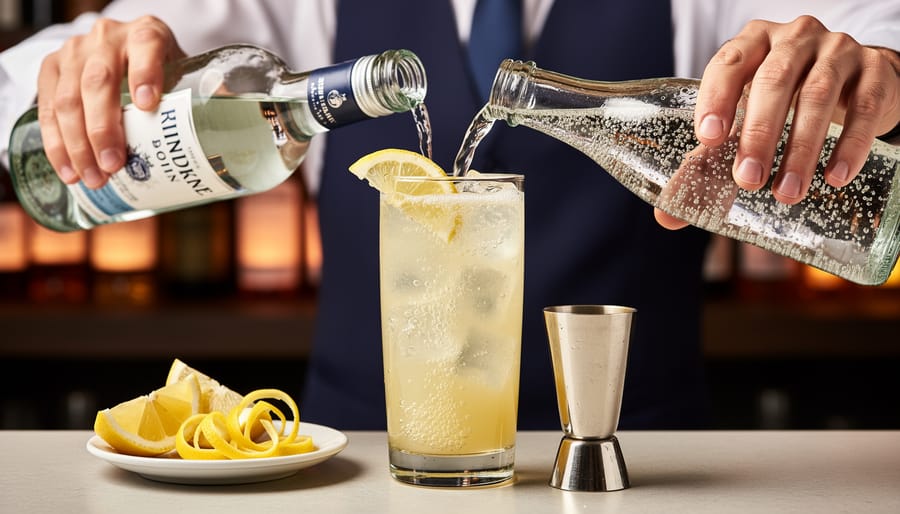
The Lemon Sorbet Gin Collins transforms the classic Tom Collins template into something softer and more nuanced. Build it in a highball glass with ice: combine 2 oz London dry gin, ¾ oz fresh lemon juice, and ½ oz simple syrup. Stir gently, then top with 3-4 oz of Lemon Sorbet bubble water and give it one quick stir to integrate.
What sets this version apart is the sorbet flavor itself, it brings a rounded, almost creamy citrus quality that tempers the gin’s botanical sharpness without adding sweetness or dairy. The result feels lighter and more approachable than a traditional Collins, with a subtle dessert-like edge that works surprisingly well in a highball format. If you enjoy citrus-forward serves like the Key Lime Martini this riff delivers similar brightness in a longer, more sessionable form.
Garnish with a lemon wheel or a twist, and serve immediately while the carbonation is lively, once the bubbles settle, the drink loses its defining texture.
Lemon Lime Tequila Fizz
This tequila-based fizz brings bright citrus energy without the cloying sweetness of many margarita riffs. Combine 2 oz blanco tequila, ¾ oz fresh lime juice, and ½ oz agave nectar in a shaker with ice. Shake hard for 10 seconds, then strain into a Collins glass filled with fresh ice. Top with 4 oz lemon lime bubble water, pouring gently down the side of the glass to preserve carbonation.
The salt rim is optional but worthwhile here, run a lime wedge around half the rim and dip in coarse sea salt, leaving the other half bare so drinkers can choose their experience with each sip. I prefer Tajín on the rim for a smoky, spicy kick that plays beautifully against the agave and citrus.
Garnish with a lime wheel and a sprig of fresh mint if you have it. The lemon lime bubble water adds effervescence and a clean citrus backbone that lets the tequila’s agave character shine through, while the fresh lime juice provides tartness and the agave nectar rounds everything out with just enough sweetness.
Tips for Mixing with Bubble Sparkling Water
Working with bubble sparkling water is straightforward once you master a few bartending fundamentals that preserve carbonation and balance flavors. The key is understanding how these lightly-flavored waters behave differently from traditional sodas or heavy mixers.
Temperature matters more than many home bartenders realize. Keep your bubble water refrigerated until the moment you need it, cold liquid holds carbonation better than room-temperature counterparts. I learned this the hard way at a backyard party when pre-mixed pitchers went flat within twenty minutes. Now I build individual drinks on demand, which also lets guests customize their serves.
For flavor pairing, think about whether you want complementary or contrasting profiles. A berry bubble water naturally complements vodka or gin botanicals, while a bright lemon lime variety creates exciting contrast against aged spirits like bourbon. When making a Captain and Ginger you could swap traditional ginger ale for a lemon lime bubble water to lighten the sweetness and highlight the rum’s natural character.
Since bubble sparkling waters contain no sugar, you’ll need to adjust your cocktail’s sweetness independently. Add simple syrup, agave nectar, or liqueurs to taste before topping with the carbonated water. Start with half an ounce of sweetener, then build up, it’s easier to add than subtract.
Experiment with different brands and flavors to discover your personal favorites. The bubly POP line available in Canada offers berry, black cherry, and lemon lime options, while their standard range includes creative profiles like Lemon Sorbet. Each brand’s carbonation level and flavor intensity varies slightly, so treat your first few attempts as learning opportunities rather than perfect serves.
Common Questions About Bubble Sparkling Water in Cocktails
Home bartenders often have practical questions when they first start mixing with bubble sparkling water, and getting the answers right makes all the difference between a flat disappointment and a perfectly fizzy cocktail.
Can you use bubble sparkling water instead of club soda in cocktails?
Absolutely, but keep in mind you’ll be adding fruit flavor to the drink rather than neutral carbonation. This works beautifully in many cocktails where that extra flavor dimension enhances the serve, but it’s not ideal if you want a completely neutral fizz that lets the spirit shine on its own.
Do the flavors in bubble sparkling water overpower the spirits?
Not if you balance your cocktail properly. The fruit flavors in products like bubly are subtle enough to complement rather than dominate when you’re using proper proportions, typically 2-4 ounces of bubble water to 1.5-2 ounces of spirit. If you find the flavor too assertive, simply reduce the amount of bubble water and top with plain sparkling water.
How long does the carbonation last once I open a can?
Bubble sparkling water loses its fizz relatively quickly once opened, so it’s best used within a few hours for optimal carbonation. If you’re making multiple drinks, pour what you need immediately and cover the opening with plastic wrap secured with a rubber band to preserve some bubbles for your next round.
Can I batch cocktails that include bubble sparkling water?
You should batch everything except the bubble water itself, combine your spirits, juices, and sweeteners ahead of time, then add the bubble water fresh to each individual serving. Pre-mixing carbonated ingredients results in flat, lifeless drinks that defeat the whole purpose of using sparkling water.
Another common concern is storage. Unlike spirits, bubble sparkling water is best kept refrigerated even before opening, especially if you want that crisp, refreshing chill when you mix your cocktail. The 355 ml cans are perfectly portioned for making two to three standard cocktails, which means you can use most of a can in one mixing session without worrying about waste or flat leftovers.
Bubble sparkling water has carved out its own space in the world of refreshment and mixology, proving that carbonation doesn’t need to be complicated to be compelling. Whether you’re reaching for a can straight from the fridge on a hot afternoon or topping off a carefully crafted cocktail, these playful, fruit-forward waters deliver clean flavor and consistent fizz without the baggage of added sugars or artificial sweeteners. They’ve become fixtures in both everyday hydration and home bar setups, bridging the gap between simple refreshment and creative cocktail experimentation.
The real magic happens when you start treating these sparkling waters as blank canvases for your own signature serves. Try pairing unexpected flavors with spirits you already love, or use them to lighten classic cocktails that typically lean heavy on syrups. There’s no wrong answer, just pour, taste, adjust.
If you’ve created a bubble water cocktail you’re proud of, share it with fellow enthusiasts online or in the comments. And as always, enjoy responsibly and savor every sip.